Trusted By Patients At Ealing - Private Microsuction Ear Wax Removal In Ealing W5
This Page Last Updated - 31st Jul 2026 at 6:43pm
Our Ealing clinic operates from Back 2 Well-Being, a short three‑minute walk from Northfields underground station. The entrance is at street level and the consulting room is on the ground floor. There is some nearby free parking outside the restricted hour of 2pm to 3pm, so please allow a little extra time to find a space if you are driving.
Ear Wax Removal Ealing West London Map, Location and Directions
You can get directions to our Microsuction Ealing Location here. Just put in your location in the specified area and Google Maps should lead you to the clinic.
%%JSLNAPSECTION_1_A527842A99F977DA%%
Probably the best ear wax removal clinic in Ealing – don’t just take our word for it – here are some reviews from our many happy clients:
Private Microsuction Highly Recommended by Local Patients

Reasons Patients Prefer Our Clinic
Many patients from Ealing and nearby W5 postcodes choose our private microsuction service because we combine a calm clinical setting with an experienced audiology team. Visitors frequently comment on reliable cerumen removal, short waits for appointments and clear explanations from clinicians who are registered and insured. The procedure is carried out under magnification using targeted suction rather than irrigation, which helps reduce water exposure and improves visual control. Findings are documented and straightforward aftercare advice is given, so most people need little or no follow-up. We focus on patient comfort, using modern suction units and a sterile workflow, which can be important for hearing aid users, those with recurrent wax or people with tinnitus. Good communication and clinical outcome both contribute to patient satisfaction.
We are happy to answer questions about the procedure, the usual appointment length and whether a hearing assessment should accompany treatment. If further audiology, ENT input or ongoing monitoring appears necessary, we explain the rationale and proposed next steps so you can decide with confidence.
Microsuction: a Step-By-Step Overview
What Happens During the Procedure
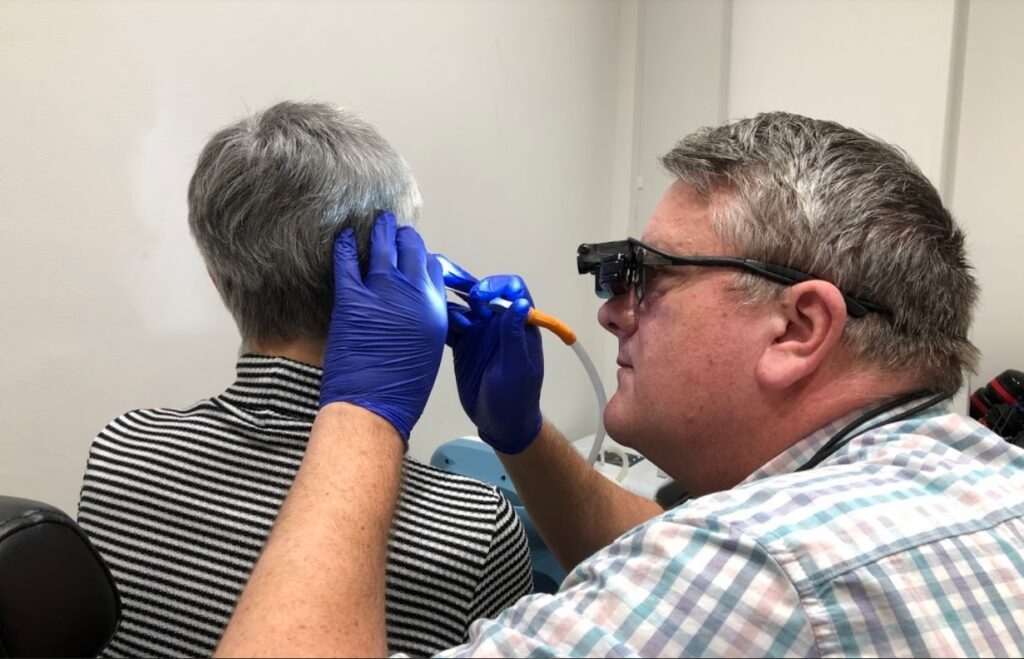
Microsuction is a mechanical technique for cerumen removal performed under direct vision with a binocular microscope or a high‑magnification otoscope and a small suction probe. The clinician inspects the ear canal to judge wax position and consistency, then clears debris with short, controlled passes. This approach reduces the risk of pushing material deeper into the canal, minimises exposure to water and allows the patient to give immediate feedback about any discomfort. Sessions commonly take around ten to thirty minutes, depending on how impacted the wax is and whether both ears are treated. The clinician will also check for signs of infection, eardrum integrity and any unusual findings that might require ENT review.
Benefits Compared with Alternative Methods
Against irrigation or hand instruments used without magnification, microsuction provides superior visual control, a lower perforation risk and a reduced chance of packing wax against the tympanic membrane. It is often preferred for hearing aid wearers, people with repeated impaction and patients with prior middle ear problems. The dry technique suits those who dislike water in the ear, and it is usually delivered by clinicians with audiology or ENT training in private clinic settings, using regulated suction units and single‑use or properly sterilised accessories.
Safety Considerations
Clinicians assess for contraindications such as recent ear surgery, ongoing discharge or severe ear pain before offering microsuction. Verbal consent is obtained so the patient understands the steps, sensations to expect and any potential risks.
Useful Practical Tip
Bring any details about previous ear surgery or current hearing devices, and tell the clinician if you take blood‑thinning medication, since this can affect the approach to treatment and follow‑up recommendations.
Accessible Facilities
Published Accessibility Features
- Wheelchair-accessible entrance
- Wheelchair-accessible toilet
Accessibility details are provided by Google Maps. Contact the location to confirm individual requirements.
We provide level access and the clinic is on the ground floor, making it straightforward to enter and reach the consulting room.
Appointments, Availability and How to Book

How to Find a Convenient Appointment
Our service runs by appointment only so each patient gets sufficient time for assessment and treatment, which keeps waiting in reception to a minimum and allows clinicians to focus on individual needs. Booking online is typically the quickest route and often offers earlier slots than local NHS lists. When demand is high we keep a cancellation list and may contact patients with short‑notice availability. Please tell us if you need level access or an extended appointment when you book so we can allocate the correct slot. Early morning or late afternoon appointments are sometimes available for those travelling from outside Ealing.
When you make a booking you will be asked about current symptoms, any history of ear surgery and whether you use hearing aids or ear drops. Providing this information in advance helps the clinician prepare and can reduce the need for repeat visits. Let us know if you have a blue badge or mobility requirements so arrival can be as smooth as possible.
Parking for Disabled Clients
Car Parks Near Hearing First Ealing London
- Parking lot, approximately 0.9 miles from Hearing First Ealing London. View on Google Maps.
- Parking lot, approximately 0.6 miles from Hearing First Ealing London. View on Google Maps.
- Parking lot, approximately 0.8 miles from Hearing First Ealing London. View on Google Maps.
Parking information and place links are provided by Google Maps. Check restrictions and charges locally.
Clients with a blue badge can park on double yellow lines for up to three hours, in line with local regulations.
Clinic Accessibility, Parking and Arrival Advice
Access for Patients with Mobility Needs
The premises are on the ground floor with level entry into reception and the clinical area, which benefits wheelchair users, those with walking aids or anyone with limited mobility. The reception team will assist on arrival and will let the clinician know if additional time or help with seating is required. Advance notice of access needs allows us to prepare the room layout and avoid unnecessary delays.
Local Parking Guidance
Short‑term on‑street parking close to the clinic is convenient for brief visits, and several public car parks are within walking distance for longer appointments. Blue badge holders often have extra flexibility under local traffic rules, but we recommend checking signage near the clinic before arrival and leaving a little extra time in busier periods. Public transport is also a practical option for many patients.
Arrival Tip
Please aim to arrive ten minutes early so you can complete any necessary paperwork and the clinician has time to review your history. If you expect to need assistance, mention this when booking so the team can be ready to help.
Book Your Microsuction Appointment Today, And End Ear Wax Discomfort

Our Ealing microsuction clinic also welcomes patients from East Finchley, Church End, Golders Green, Hendon, Hampstead Garden Suburb, Mill Hill, Barnet, Finchley, Highgate, Crouch End, Hornsey, Harringay, Southgate, Whetstone, Arnos Grove, Osidge, Wood Green and Tottenham. We aim to make care accessible for nearby communities.
Clinics Nearby for Your Convenience
We try to make it easy to find ear wax removal services close to where you live. Below are some alternative clinics in our network that may be useful:
These sites form part of the wider network so you can access quality ear care nearer to home if needed.
What to Expect During Your Microsuction Appointment
Research Catalogue Results for Ear Wax Removal
- The auricular cough reflex: lateralization, prevalence, procedural determinants, and the role of examiner handedness. - van de Loo J, Mayer M, Sharaf K, Eckel H, Jansen L, Klussmann JP, Luers JC., 2026.
- High-definition otoscopic device for humanitarian mission: how i do it. - Lechien JR, Maniaci A, Kipsang MJ, Kibor M, Vaira LA., 2025.
- Use of Castor Oil in Dermatology: A Narrative Review. - Girdler K, Cabatu A, Olds H, Potts GA., 2026.
Source: Europe PMC. These are bibliographic matches, not personalised medical advice or an endorsement of a treatment.
- Management Of Complex Wax: If the wax is hard or adherent, the clinician may recommend softening drops beforehand or use fine instruments alongside suction, always prioritising safety and a clear view of the canal.
- Examination Of The Ear Canal: Prior to any intervention the clinician uses a high‑magnification otoscope or microscope to inspect the canal and tympanic membrane for wax, inflammation or signs of infection.
- Hearing Assessment And Onward Referral: If hearing does not return to normal or the eardrum appears abnormal, the clinician will discuss a hearing test or ENT referral and explain the next steps clearly.
- Initial Consultation, History And Consent: The clinician takes a focused history of ear symptoms, past ear surgery and medication, explains the procedure and confirms consent before examination.
- Post‑Procedure Checks And Reporting: After removal the clinician re‑inspects the ear, outlines immediate symptoms to watch for and provides written or verbal aftercare guidance, including when to seek further review.
- Stepwise Microsuction Technique: Small, gentle suction probes are used under direct vision to remove wax in short bursts, with pauses to check comfort and reassess the ear canal view.
Most patients leave with clearer ears and practical advice about preventing recurrence, caring for hearing aids and when to return for routine checks or earlier review if symptoms change.
How to Book an Appointment
Private ear wax removal runs by appointment only because demand is high. You can book an ear microsuction appointment online here, or use the button below to reserve a slot:
Support for Disabled Clients
Our clinic is designed to be accessible, with ground floor level access to the consultation space to accommodate clients with mobility needs.
If you have particular requirements or need extra assistance during your visit, please tell us in advance so we can make suitable arrangements and ensure a comfortable appointment.
Clinical Governance, Practitioner Qualifications and Equipment Standards
Staff Training and Professional Oversight
Our clinicians hold recognised qualifications in audiology or ENT‑related practice and keep registrations current with relevant professional bodies. Continuing professional development, practical competency checks and peer review are part of our governance framework to maintain standards. We operate policies on infection prevention, equipment calibration and clinical supervision, and we keep treatment records to support continuity of care and any necessary referrals. Practitioners are trained to spot red flags such as ear discharge, severe pain or unexpected examination findings and will act promptly if urgent ENT assessment is required.
Equipment, Servicing and Safety Checks
Microsuction units and microscopes undergo routine servicing, single‑use suction tips are used where appropriate and sterilisation protocols apply to reusable instruments. Maintenance and safety checks are documented so patients can be assured of the clinical equipment’s condition. If you would like more information about the suction unit model or infection control procedures, the team will explain these before treatment.
Quality Assurance Measures
We use audits of clinical outcomes and patient feedback to inform service improvements, and we can provide information about clinician experience and governance on request to help patients choose a provider with confidence.
Request Information
Patients may request copies of their treatment notes or details about clinician credentials, and we will provide these promptly in line with data protection and clinical records policy.
Parking Details
There is free on‑street parking for up to 30 minutes in designated “Stop and Shop” bays close to the clinic.
Aftercare, Warning Signs and Recovery Expectations
Following microsuction most people notice immediate improvement in hearing and relief of pressure. The ear canal can feel mildly tender or sensitive for a day or two, and a brief increase in tinnitus is possible in some cases. We give both verbal and written aftercare instructions covering gentle cleaning, when to keep water out of the ear and which symptoms should prompt review. If you are prone to recurrent impaction, the clinician may recommend a maintenance plan that could include periodic checks or intermittent use of softening drops to reduce future blockages. Hearing aid users will receive tailored advice on cleaning and re‑fitting aids to maintain comfort and device performance.
Contact the clinic urgently if you develop severe persistent pain, new ear discharge, dizziness or a significant drop in hearing after the procedure, as these may signal complications that need prompt assessment.
Further Information

You can read more about our Ealing ear wax removal clinic here.
Parking Facilities Nearby
We offer short‑stay on‑street parking options including free 30‑minute “Stop and Shop” bays to make clinic visits easier. These are convenient for quick appointments and drop‑ins where applicable.
Please check local parking signs before leaving your vehicle to make sure you comply with any restrictions. If you have questions about parking, contact the clinic and we will try to help.
When Microsuction Is Unsuitable, and Alternatives
Contraindications and Clinical Judgement
Certain situations make microsuction inappropriate, for example a recently perforated eardrum, ongoing ear discharge, recent ear surgery or an acute infection. In these circumstances the clinician will explain safer alternatives, which may include ENT review, short‑term topical treatment or a modified approach to wax management. Patients with sudden sensorineural hearing loss or unexplained neurological signs will be prioritised for urgent assessment and not treated until investigations are complete. The clinician’s judgement centres on patient safety, and declining to proceed with microsuction reflects evidence‑based assessment rather than convenience.
Other options such as supervised irrigation, monitored use of cerumenolytic drops or ENT referral for operative management may be suggested depending on the underlying problem. The team will outline the expected benefits, risks and likely timelines so you can make an informed choice.
Other Nearby Clinics
Some patients prefer to attend a different local site in the network; here are a couple of examples:
- Edgware: Private Microsuction Ear Wax Removal In North London
- Surbiton: Private Microsuction Ear Wax Removal In Surbiton KT6
Disabled Parking Options Nearby
Blue badge holders can usually park on double yellow lines for up to three hours, which helps make access to the clinic easier.
We suggest arriving a little earlier to secure the most convenient spaces. If you need any assistance with disabled parking arrangements, please get in touch.
Cost, Value and What to Expect from Private Ear Care
Published Payment Methods
- Credit cards
- Debit cards
- Contactless or NFC payments
Payment information may change. Confirm prices, insurance eligibility and accepted methods directly with the provider. Place attributes are provided by Google Maps.
Private microsuction typically offers reduced waiting times, personalised one‑to‑one care and greater booking flexibility compared with many NHS pathways. Fees vary between providers and reflect factors such as whether one or both ears are treated and whether additional steps are needed, for example pre‑treatment drops or an extended assessment for underlying hearing loss. Rather than listing prices here, we recommend checking what is included in the consultation fee, such as assessment, the microsuction itself, any brief hearing screen and written aftercare advice. Value is often judged on clinical outcome, clinician expertise and clarity of follow‑up arrangements rather than price alone.
- Accessibility And Convenience: Think about how easy it is to reach appointments, whether early or late slots are offered and how flexible booking is for work or caring responsibilities.
- Equipment And Hygiene Standards: Services that keep records of routine servicing and use single‑use consumables where appropriate can offer stronger infection control and predictable outcomes.
- Transparent Consultation Inclusions: Clarify whether the fee covers assessment, treatment and brief post‑procedure advice and whether extra tests incur additional charges.
- Professional Indemnity And Registration: Choosing a clinician who is registered and insured provides reassurance and protection should further care be required after the appointment.
- Repeat Or Bilateral Appointments: Ask whether treating both ears is charged as a single fee or separately, and whether short‑term follow‑up checks are included.
Video Overview: What Happens During Your Appointment
Additional Details
For further information about our Ealing clinic, including the services offered and typical opening times, please visit our dedicated page. We aim to give clear, practical information to help you plan your appointment.
Explore the site for more details on ear care, microsuction and how we support hearing aid users.
Other Clinics in Our Network and Coverage Area
We operate a network of private clinics across west and north‑west London to give convenient access to microsuction and ear health services. Sites are chosen to reduce travel time and to maintain consistent clinical standards, with the same governance and training applied to clinicians. If your nearest clinic is fully booked we can often offer appointments at another location in the network, and clinical records may be shared between sites with your consent to ensure continuity of care. The team can advise which nearby clinic has the earliest availability when you call or book online.
- Shared Clinical Records: With patient consent, notes can be transferred between clinics to streamline follow‑up and avoid repeating the same history.
- Neighbouring Convenience: Local sites are selected so patients can access care without lengthy travel, which is helpful for those needing recurrent maintenance or hearing aid support.
- Flexible Appointments: Multiple locations increase the chances of finding a convenient date and time for appointments.
- Consistent Standards: Each clinic follows the same safety and equipment protocols to maintain comparable clinical quality.
- Geographical Coverage: Clinics are positioned to serve a wide area across west and north‑west London for commuters and local residents alike.
Microsuction Compared with Ear Syringing
Many GP practices in West London no longer offer ear syringing, which is partly due to funding and also because irrigation carries higher safety concerns compared with microsuction. Potential complications from irrigation include infection, hearing change, tinnitus, tympanic membrane perforation and the risk of pushing wax further onto the eardrum. Increasingly, people are choosing microsuction for a safer, dry technique when wax removal is needed. As a result, NHS microsuction services can have long waiting times in some areas.
You do not necessarily need to wait months for microsuction; private clinics can often provide quicker access. If you prefer to proceed privately, visit our booking page to check available appointments and potentially resolve your blockage sooner.
Fascinating Facts About Ealing

- Ealing’s Historic Windmill: The Ealing Windmill, built in 1770, is one of the few remaining windmills in London and was used for grinding corn until the 1860s.
- The Ealing Art Trail: Launched in 2011, the Ealing Art Trail showcases local artists and their work, transforming the borough into an open-air gallery every September.
- Ealing’s Victorian Cemetery: Opened in 1855, the Ealing Cemetery is the final resting place of notable figures, including the famous Victorian novelist and playwright, George Bernard Shaw.
- The Ealing Broadway Shopping Centre: Originally opened in 1985, the Ealing Broadway Shopping Centre underwent a major redevelopment in 2018, expanding its retail space and modernising its facilities.
- Ealing’s Diverse Cuisine: Ealing boasts a vibrant culinary scene with restaurants offering cuisines from around the world, reflecting the borough's multicultural community.
- Ealing’s Historic Railway Station: Ealing Broadway Station, opened in 1838, is one of the oldest railway stations in London and features a Victorian-style building.
- “Queen of the Suburbs”
Ealing earned its regal nickname in the 19th century as one of London’s first garden suburbs, famed for its leafy streets and grand Victorian villas. Developers marketed it as a rural escape for wealthy Londoners, a reputation still reflected in Ealing’s green spaces like Walpole Park. - Ealing Studios: Birthplace of British Film
Founded in 1902, Ealing Studios is the world’s oldest continuously working film studio. It produced the iconic *Ealing Comedies* of the 1950s, including *The Ladykillers* (1955). Scenes from *Notting Hill* (1999) and *Downton Abbey* were also filmed here, cementing Ealing’s cinematic legacy. - Pitzhanger Manor’s Hidden Gem
Designed by architect John Soane in 1800, this Ealing landmark was his country retreat. Its quirky design includes hidden mirrors and skylights. Charlie Chaplin filmed scenes for *A Woman of Paris* (1923) in its gardens, though locals kept it secret to avoid crowds. - Ear Wax Removal in Ealing
Ear wax removal is available from the experts at Hearing First Ealing on Thursdays at Back 2 Well-Being on Northfield Road, just a few minutes’ walk from Northfields station. Click here to book now. - Medieval Roots of St. Mary’s Church
Ealing’s 12th-century St. Mary’s Church on St Mary’s Road was rebuilt in the 19th century but retains medieval foundations. During renovations, workers found a 14th-century “leper squint”—a wall hole for outcasts to view Mass—hinting at Ealing’s role in medieval religious life. - The Great Ealing Fair
From 1215 to 1879, Ealing hosted a sprawling annual fair granted by King John. Revived in 1995 as the Ealing Beer Festival, it nods to its raucous past when traders, performers, and pickpockets flooded the town. A plaque near Ealing Broadway marks the original site. - Ealing’s Rebel Suffragettes
In 1913, Ealing suffragettes firebombed the local railway station in protest. A hidden mural near Haven Green commemorates their activism, though council records downplay the “unladylike” tactics of Ealing’s militant campaigners. - Haunted Ealing Town Hall
Built in 1888, Ealing Town Hall’s clock tower is said to be haunted by the “White Lady,” a ghostly figure linked to a heartbroken bride who jumped from the tower in 1891. Staff report cold spots and phantom footsteps in the ballroom. - The Lost Ealing Lido
Opened in 1931 near Lammas Park, Ealing Lido was a summer hotspot with art deco diving boards. Closed in 1989, its site is now housing, but locals swear summer nights echo with splashes and 1950s rock ’n’ roll. - Ealing’s Jazz Age Secret
In 1933, Duke Ellington played a surprise gig at Ealing’s Red Lion pub. The event was kept hush-hush to avoid racial tensions, but a scribbled set list found in the cellar in 2002 confirmed the legend—now framed behind the bar. - Monty Python’s Ealing Link
Scenes from *Monty Python and the Holy Grail* (1975) were filmed in Ealing’s Warren Farm. The “Knights Who Say Ni” sequence used its overgrown fields, though locals initially mistook the cast for eccentric hikers. - Ealing’s Green Goddess
The 1898 Walpole Park statue of Ceres, Roman goddess of agriculture, was nicknamed the “Green Goddess” after being painted by pranksters in the 1960s. Ealing Council restored her, but greenish stains still linger—blamed on “divine intervention.” - The Ealing Club: Cradle of British Blues
Dubbed “the birthplace of British R&B,” this basement venue on The Broadway hosted The Rolling Stones’ first gig in 1962. Alexis Korner’s band rehearsed here, and a plaque now honors Ealing’s role in launching the 1960s blues boom. - Ealing’s UFO Panic
In 1964, over 50 Ealing residents reported a “cigar-shaped object” hovering near Hanger Lane. The *Ealing Gazette* ran front-page sketches, but the RAF dismissed it as a weather balloon—locals still debate “the day Ealing met aliens.” - Secret Bunkers Under Ealing
During the Cold War, a network of bunkers was built beneath Ealing Town Hall. Rediscovered in 2010, they contained decaying 1960s survival kits. Urban explorers joke about Ealing’s “apocalypse Airbnb,” though access remains restricted. - Ealing Abbey’s Musical Legacy
Founded in 1897, this Benedictine monastery houses a choir school that trained composer John Tavener. Its Gregorian chants still echo through Ealing, and rumors persist of a ghostly monk humming plainsong in the cloisters at midnight. - The Ealing Feasts
From 1547, Ealing hosted lavish “Parish Feasts” to celebrate the harvest. Revived in 2012 as a food festival, the event recreates Tudor recipes—though the original “ale-soaked bread” is now craft beer and sourdough. - Ealing’s Film Star Park
Lammas Park’s meadows doubled as African savannah in *The African Queen* (1951) and Victorian London in *Finding Neverland* (2004). Locals joke that Ealing’s grass is “Hollywood-grade,” though dog walkers rarely spot cameras. - The Southall Rail Disaster Memorial
In 1997, a train collision in Southall (part of Ealing borough) killed seven. A memorial garden off Tentelow Lane honors the victims, though many passersby mistake it for a quiet picnic spot. - Ealing’s “Hanging” Station Sign
Ealing Broadway’s tilted station sign, damaged by a lorry in 2003, sparked rumors of a cursed “hanging sign.” Staff lean into the myth, telling commuters it tilts further whenever a train is delayed—a playful nod to Ealing’s commuting woes.
Patient Preparation Checklist and Top Tips

Preparing for your microsuction appointment helps the clinician aim for a single‑visit resolution. Bring a list of current medications and tell us about any recent ear problems, prior ear surgery or hearing device use. Avoid inserting cotton buds or other objects into the ear in the days before your appointment, as these can compact wax further. If your GP has prescribed ear drops, continue them only if instructed; otherwise follow advice provided by the clinic. Allow extra time for parking or settling in reception if you have mobility needs, and be open about anxiety, a sensitive gag reflex or a low discomfort threshold so the clinician can adapt the pace and technique accordingly.
On the day, consider taking someone with you if you are worried about driving afterwards, although most patients are fit to drive once any immediate disorientation has passed. If you need a written report for your GP or employer, request this when booking so the clinician can prepare it during the appointment.
Hearing First Ealing
Located within Back 2 Well-Being,
URL: https://www.hearingfirst.co.uk/book-ear-wax-removal-near-me/book-microsuction-ear-wax-removal-ealing/