Hythe CT21 taxi drop-off point — directions to private microsuction earwax removal clinic for visitors and how to book an appointment
Guide Last Updated | 2026-02-27 01:08
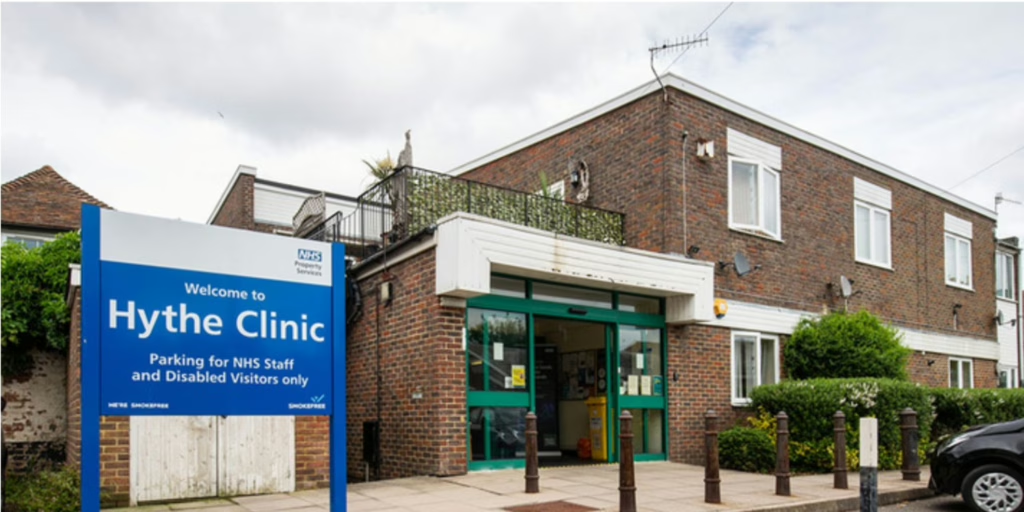
Our Hythe ear wax removal service sits at Hythe Clinic on Sun Lane, with dedicated disabled parking right outside and step-free access into the building, making arrival straightforward for patients who need mobility support or are using hearing aids.
Hythe CT21 drop-off and directions: getting to the private microsuction clinic and booking essentials

Hearing First Hythe is on Sun Lane, CT21 5JU, and welcomes private microsuction earwax removal patients as well as those seeking audiology support or hearing aid assistance. If you arrive by taxi, there is a convenient drop-off point close to the entrance, which keeps the final walk level and brief; entering the address into Google Maps will place the pin accurately. Routes from the town centre, seafront or Folkestone are simple to follow, with local signs and kerbside set-downs to make access faster. The reception team regularly answers access queries, and will guide you over the phone about mobility options or directions so appointments run smoothly and safely.

Quick access notes
- Enter CT21 5JU into your satnav or Google Maps for an exact route, the pin sits right by Hythe Clinic and reduces walking for patients with hearing devices.
- The taxi drop-off sits on Sun Lane, directly opposite the clinic door, permitting a flat approach suitable for wheelchairs and pushchairs, please ask drivers to use the short-term set-down area only.
- Plan to arrive about five minutes before your appointment so staff can confirm medical details, and bring any prior earwax removal notes or hearing aid information to help the clinician with microsuction.
- If you prefer bus or train links, the nearest stops are a short taxi ride away, making the clinic reachable from Folkestone, Sandgate and nearby villages.
- Payment, consent and a short clinical screening take place on arrival, reception will advise on street parking, disabled bays and onward directions if you are dropped off by taxi.
Short walk or taxi from Hythe High Street to Sun Lane clinic
From Hythe High Street the stroll to Hearing First on Sun Lane is brief, usually under ten minutes for most adults, and it is handy for anyone who would rather walk than drive. Pavements are clearly signed, you cross at marked crossings and pass familiar landmarks on the way, which helps with orientation. Walking avoids parking delays; alternatively a taxi can use the Sun Lane drop-off for a quick set-down. Bear in mind pavements may be busier at peak times, bring any mobility aids you need and tell the clinic if you’d like a staff member to meet you at the door.
Step-by-step walking directions
- Follow the route along Guildhall Street then turn onto Sun Lane where local signage will direct you to the Hythe Clinic; the surface is mainly level and suited to pushchairs and mobility scooters.
- Exit Hythe High Street towards the seafront, head east along the main thoroughfare, using the pedestrian crossing near the post office to reach more direct paths towards Sun Lane and the clinic entrance.
- If you prefer a taxi for the short trip, instruct the driver to set you down at the clinic kerb on Sun Lane to minimise walking distance, and request assistance with luggage or mobility equipment if needed.
- On arrival approach reception with any referral letters or hearing aid details, staff will confirm your booking and explain the expected microsuction procedure and any pre-appointment guidance.
- If you have difficulty walking the last few metres phone the clinic on arrival, a member of staff can meet you outside and escort you in, ensuring comfort ahead of your private earwax removal appointment.
Tip for visitors unfamiliar with Hythe
If you are new to Hythe, check the tide times and weather for the seafront, because the area can be busy; allow an extra ten minutes so you do not need to rush and can find parking or the clinic entrance calmly.
Micro-guideline for mobility
Bring a lightweight folding stool or ask for seating at reception if you expect delays; many patients with mobility needs say this small step improves comfort while they wait and helps keep appointments on time.
Further clarification
If your mobility needs are complex, mention them when booking, the clinic reserves accessible appointment slots and can sometimes hold a disabled bay near the door for an easier arrival.
21 Fascinating Facts About Hythe
- Hythe Was Once an Island
Historical and geological evidence indicates Hythe was formerly surrounded by marshes and tidal inlets, making it effectively an island in ancient times; subsequent silting and reclamation connected it to the mainland and reshaped local trade and settlement patterns. - Close Ties to Sandgate and Folkestone
Hythe sits in a coastal trio with Sandgate and Folkestone, sharing cultural events, military history and community projects, offering varied attractions from galleries to coastal walks. - The Royal Military Canal is 28 Miles Long
Built between 1804 and 1809 as a defensive measure, the canal was never used in wartime but now provides a peaceful route for walking, canoeing and wildlife spotting along its tree-lined banks. - Microsuction Ear Wax Removal In Hythe
If you need a reliable ear wax removal clinic in Hythe, Hearing First Hythe operates from the Hythe Clinic. You can click here to Book Microsuction Ear Wax Removal Hythe. - It Was Bombed During the Blitz
Hythe sustained damage during World War II due to its proximity to strategic military sites; several bombs affected homes and public buildings, leaving traces in the town’s architecture and wartime memory. - Old Fire Station is Now a Restaurant
The former fire station has been revitalised as a distinctive restaurant, keeping features like the tall engine bay doors and red brickwork while providing a modern dining atmosphere. - One of the Least Commercialised Seaside Towns in Kent
Hythe has preserved much of its historic character, with a peaceful seafront and a traditional High Street that appeal to people looking for an authentic coastal town experience. - The Martello Towers
Small circular forts built in the early 19th century to deter invasion still dot the coast; some are now private homes or storage spaces, preserving military heritage in a modern setting. - Hythe’s High Street is Largely Independent
Rather than being dominated by big chains, Hythe’s High Street features family-run shops, bakeries and unique boutiques, giving it a strong local character and a personal shopping experience. - The Crypt is Open to the Public Seasonally
St Leonard’s ossuary crypt, home to thousands of neatly stacked bones, opens at certain times of year and provides a rare, historical window into medieval burial practices. - The End Point of the Elham Valley Railway
The Elham Valley Railway connected Hythe to Canterbury from 1889 until 1947 and was significant during both world wars; remnants like embankments and bridges remain in the countryside. - Hythe Has a Unique Microclimate
Situated by the sea and sheltered by the North Downs, Hythe often enjoys milder winters and warmer, drier summers than inland Kent, making it attractive to walkers and retirees. - The Town Has Roman Roots
Archaeological finds such as coins, pottery and tiles indicate Roman activity long before Hythe became a medieval port and part of the Cinque Ports network. - St Leonard’s Tower is Over 100 Feet Tall
The striking stone tower of St Leonard’s Church, dating to Norman times, dominates the skyline and contains a rare ring of eight bells, hinting at both religious and defensive roles. - Historic Inns Date Back to the 14th Century
Inns like The White Hart and The King’s Head preserve medieval cellars, crooked beams and old fireplaces, telling tales of travellers and smugglers from centuries past. - Hythe Hill Offers Panoramic Views
The escarpment to the north provides sweeping vistas over the town, marshes and the Channel, popular with photographers, dog walkers and nature lovers. - The Town Was Part of the Saxon Shore
Hythe’s strategic role in the Saxon Shore system of Roman coastal defences helped shape its identity as a Cinque Port and a maritime stronghold. - Hythe Was Once a Major Salt Producer
Salt extraction from tidal marshes contributed to the town’s medieval economy, with salterns and pans supplying a valuable commodity for trade. - Military Road Was Built for Efficiency
Constructed by the War Office in the 19th century, Military Road linked the School of Musketry to the coast and remains a straight, wide route used today. - Hythe Beach is a Mix of Shingle and Sand
The shoreline is mainly shingle above the high tide line but reveals sandy stretches at low tide, suitable for paddling, beachcombing and coastal fishing. - Hythe Is a Filming Location
With an unspoilt High Street and atmospheric coastal scenes, Hythe is a popular choice for period dramas, documentaries and feature shoots that need a historic English backdrop.
Hythe taxi drop-off details and kerbside guidance
The taxi set-down for Hearing First Hythe is located beside the Sun Lane entrance and is intended for quick passenger discharge only, so drivers should not leave vehicles there. The low kerb and straight pavement lead directly into the clinic foyer, easing access for passengers with reduced mobility. When booking a taxi, please request drop-off at Sun Lane Hythe Clinic to avoid confusion with nearby businesses, and to help keep kerbside space free for other patients.
Instructions for taxi drivers and private hire
- Approach Sun Lane slowly, look for the short-term set-down marking opposite the clinic, and ensure passengers alight on the kerb nearest the entrance to avoid crossing traffic lanes unnecessarily.
- Passengers requiring assistance should be helped by the driver to the kerb, then the passenger or clinic staff will inform reception of any mobility or hearing aid requirements before entering.
- Do not leave the vehicle unattended in the drop-off bay, use the public car park for parking or request short-stay bays on nearby side streets if you need to wait for a passenger recovering from microsuction.
- If a passenger has large items or a mobility scooter, call the clinic in advance so staff can reserve the adjacent disabled bay or meet the taxi for immediate help with unloading.
- For late-night or early-morning journeys confirm availability with the driver and clinic reception, as kerbside lighting and pedestrian crossings differ across the area and the safest drop-off is during daylight where possible.
Microsuction versus ear syringing: why many choose microsuction
Many people across North West London have found their GP no longer offers ear syringing, partly due to funding and partly because irrigation carries greater clinical risk compared to microsuction. Syringing can lead to infection, tinnitus, hearing loss, eardrum perforation, or pushing wax deeper into the canal, whereas microsuction is generally safer for fragile ear canals and hearing aid users. Increasing demand means NHS microsuction waits are often long, sometimes two to three months, which is why many patients now opt for private microsuction.
You do not have to wait months for microsuction. Consider a private appointment, it is often more affordable than expected. Simply visit our booking page and you could have your wax cleared this week.
Microsuction Versus Ear Syringing
Microsuction uses instruments under magnification to remove wax safely, which lowers risk to the eardrum and avoids many complications linked to irrigation. It is often recommended for people with grommets, perforations, or repeated impactions, and is widely used in audiology clinics where patient safety and hearing outcomes are priorities.
- Typically lower risk of infection or perforation, useful for fragile ear canals
- Effective for hard, impacted wax and beneficial for hearing aid users
- Often provides clearer hearing immediately, reducing need for follow-up appointments
Driving to Hythe: parking options and short-stay guidance
Driving to the clinic is straightforward from the A259, with Sun Lane accessible via local town centre roads. There is a mixture of free and pay-and-display parking nearby, plus a handful of on-site bays adjacent to the building. Follow signage to the Hythe Clinic and use marked disabled bays where relevant. Street parking restrictions apply in places, so check signs and allow extra time to locate a legal space. Use the taxi set-down for drop-off and then move to long-stay parking if you need to leave the car.
Where to park and how long to expect
- Pay-and-display bays operate during set hours, check the machine for current rates and use contactless or cash to avoid leaving without a valid ticket.
- There are a small number of free on-site parking bays for clinic patients, these are first-come first-served so allow an extra five to ten minutes during busy periods.
- Nearby public car parks on the High Street and seafront offer longer stay options if you plan to combine your visit with errands or a short walk on the promenade.
- If you require close parking for a temporary medical condition, mention this at booking and the clinic can advise on the most convenient bay and may reserve an accessible space where operationally possible.
- For those travelling from the A259, follow signs to Hythe town centre then locate Sun Lane; using GPS or Google Maps to the postcode reduces confusion when roads are busy.
Driving safety note
Seafront roads may be narrow and busier in summer, so allow extra time and avoid last-minute manoeuvres to ensure a safe arrival aligned with your appointment time.
Practical parking tip
Keep a photo of your parking meter or payment confirmation, this can help resolve disputes with wardens or provide evidence to reception if required.
Nearby clinics
Other clinics not far from Hythe include these regional sites, which can sometimes offer alternate appointment slots if Hythe is full.
- Surbiton: Private Microsuction Ear Wax Removal In Surbiton KT6
- Ashford: Private Microsuction Ear Wax Removal In Ashford TN24
- Hastings: Private Microsuction Ear Wax Removal In Hastings TN34
Public transport access, buses and nearest train links
Hearing First Hythe is served by local buses that link the town with Folkestone, Sandgate and surrounding villages. The nearest mainline station is Folkestone Central, from where a short taxi or bus trip will bring you to Sun Lane. Bus stops are within a comfortable walk and timetables are available on operator websites. Many patients choose to book a taxi for the last leg to ensure a direct kerbside drop-off, particularly if carrying mobility aids or hearing devices.
- Bus services through Hythe connect to Folkestone, Ashford and local villages, check operator timetables for current times and any temporary route changes that could affect your journey.
- If you are travelling with a mobility scooter or folding walking aid, contact the bus operator beforehand to confirm space and boarding arrangements.
- From Folkestone Central the most practical option is a short taxi ride or scheduled bus, both stop within a short walk of Sun Lane and save time for pre-appointment checks.
- Bus fares differ by operator, consider buying tickets in advance or using contactless to speed boarding and avoid delays on the way to your appointment.
- For outward and return trips allow a small buffer between services so you arrive early for registration and any paperwork before treatment.
Ear Wax Removal Hythe East Sussex Map, location and directions
You can get directions to our Microsuction Hythe East Sussex Location here. Enter your start point and Google Maps will guide you to the clinic.
Hearing First Hythe
Sun Ln,
URL: https://www.hearingfirst.co.uk/book-ear-wax-removal-near-me/book-microsuction-ear-wax-removal-hythe/
Arguably the best ear wax removal clinic in Hythe
– don’t just take our word for it, read some of our five-star feedback from satisfied patients.
Location, Map And Accessibility
Hearing First Hythe is on Sun Lane with level entry and reserved disabled bays nearby, making it easy to access for patients with mobility needs. The team is used to supporting access enquiries and can help with directions and audiology appointment details when needed.
- Level access throughout the ground-floor clinic, suitable for wheelchairs and pushchairs
- Disabled parking bays directly opposite the entrance, short walk to the door
- Clear directions are available via Google Maps and local wayfinding if required
Clinic access: disabled parking and step-free entry
The Hythe clinic is arranged to meet common accessibility needs, offering step-free entry to ground-floor consulting rooms, wide circulation space in the waiting area and reserved disabled bays close to the entrance. Reception and clinicians are familiar with patients who use mobility aids, cochlear implants or need communication support. A clear accessibility policy is in place, and the team will discuss individual requirements when you book, whether that means an accessible slot, extra time or assistance on arrival. The clinic environment is calm, suitable for patients who prefer a quieter waiting area before microsuction earwax removal.
Accessibility features provided
- Step-free entry and wide doorways make it easy for wheelchairs and walkers to access consulting rooms, minimising the need for stairs.
- Staff can provide written or large-print confirmations and will note communication preferences such as lip-reading or the use of a loop system during consultations if requested.
- Reserved disabled bays are located directly opposite the entrance, helping those with limited walking distance to reach reception quickly after a taxi drop-off or driver set-down.
- Quiet waiting areas are available for patients sensitive to noise or using hearing aids, reception may seat you away from busy corridors to aid communication.
- If you need a chaperone, translator or family member to attend, state this when booking so the clinic can allocate time and seating for your needs.
Booking accessibility assistance
When making your appointment, tell the team about support needs such as reserved parking, help at the door or longer appointment times, this gives staff time to prepare and reduces waits on arrival.
Micro-guideline for carers
Carers and escorts are welcome to accompany patients inside, please notify the clinic at booking so seating can be reserved and consent or clinical steps explained if the patient prefers privacy.
Extra note about communication
Staff receive basic deaf awareness training and use visual prompts where helpful; phone ahead to discuss specific communication preferences for a smoother clinic visit.
More information
Further details on ear wax removal in Hythe with Hearing First are available here.
How to book at Hearing First Hythe
Bookings for private microsuction earwax removal can be made online via the clinic booking page or by phoning the Hythe reception. Advance booking helps manage clinical safety, staff availability and waiting times. Please supply relevant medical history, current medications and hearing device details when booking, so the clinician can prepare. Online booking lets you choose accessibility options and receive email or SMS reminders to help you arrive ready for your microsuction appointment.
Simple booking steps
- If you prefer to speak to someone, call the Hythe phone number in office hours; the receptionist will confirm availability, take basic medical details and note requirements like disabled parking or an escort.
- Visit the dedicated booking page, enter contact details, choose the Hythe microsuction service and pick a time that suits you, adding mobility or communication needs in the comments.
- After booking you will receive a confirmation by email or SMS with directions, parking advice and a request to arrive a few minutes early for registration and consent.
- On the day bring any hearing aid information, a list of medications and photo ID if requested to speed up reception procedures.
- If you need to change or cancel, use the booking link or phone reception as soon as possible, the clinic’s cancellation policy protects appointment availability for others.
Disabled access
The clinic is on the ground floor and provides level access throughout.
What to expect during a microsuction appointment at Hythe
Microsuction is a careful, instrument-led procedure performed under magnification with a small suction probe, designed to remove earwax safely without irrigation. The clinician examines the ear with an otoscope or microscope to assess wax type and any contraindications such as a perforated eardrum. Appointments typically include a short consultation, the microsuction itself and an immediate hearing check if needed. Many patients notice instant relief and better hearing right away; aftercare advice is given and follow-up is arranged only when necessary.
- The clinician will take a brief medical history and inspect the ear to identify soft or hard wax, inflammation, or presence of hearing aids which can influence the chosen technique.
- Microsuction employs a small medical suction tool under microscopic magnification, reducing contact with delicate ear structures and lowering the risk of infection or perforation compared with irrigation.
- The procedure usually takes between five and twenty minutes depending on how impacted the wax is, and most patients find it comfortable with no downtime afterwards.
- If a contraindication such as recent ear surgery or an active infection is found, the clinician will discuss options and may refer you to your GP or an ENT specialist.
- Aftercare typically includes avoiding water in the ear for a short period if advised, and clear written guidance is provided for any follow-up needs.
Video: what will happen during your Hythe earwax appointment
Preparing for your visit: what to bring and practical tips
Preparing ahead helps the clinician provide safe, efficient care and reduces the chance of cancellation. Bring a list of current medications, any ENT correspondence and details of hearing aids or cochlear implants. Note any grommets or past ear surgery when you book. Avoid inserting drops unless the clinic advises, and wear clothing that allows easy access to the head and ears. If travelling by taxi, tell the driver about the Sun Lane drop-off so you avoid unnecessary walking with temporary hearing discomfort.
- Prepare a brief list of medications and previous ear problems, including dates of any surgery or grommet insertion, to help the clinician assess you quickly.
- Do not use cotton buds or insert objects into the ear before your appointment, these push wax deeper and can obscure the clinician’s view.
- If you use hearing aids, bring them or notes about the device, which helps with cleaning advice, fit checks and any interaction with earwax removal.
- Consider arranging transport for the return trip if you are anxious about immediate hearing changes; most people drive afterwards, but some prefer a companion for reassurance.
- Arrive five to ten minutes early to complete registration and consent forms so the appointment can proceed without delay.
Appointment booking
Due to demand, private ear wax removal is by appointment only. You can book an ear microsuction appointment here, or use the button below.
How to book your appointment
Appointments for private microsuction are by booking only, which helps manage safety and waiting times. Use the online form or phone to secure a timed slot, and include any access needs so the team can prepare for your visit.
- Check Hythe availability on the booking page or call to confirm appointment times
- Choose a suitable appointment and record any mobility or accessibility requirements
- Attend at your booked time, bringing relevant medical history or device information
Pricing, cancellations and insurance at Hythe clinic
Fees for private microsuction are clearly set out on the booking page, and staff will confirm charges when you reserve a slot. Payment is usually taken at the appointment or via the online system on booking. If you must cancel, contact the clinic promptly so the slot can be offered to another patient, as a cancellation policy protects clinical time. Some insurers may cover earwax removal when clinically necessary, so check your policy and request an invoice for reimbursement. Confirm accepted payment methods when booking.
Cancellation and payment policy
- Cancellation with adequate notice avoids fees for many appointments, please read the clinic policy or ask reception for the specific window required to cancel without charge.
- Receipts and detailed clinical notes can be provided to support insurance claims, the clinic aims to supply documentation promptly after treatment.
- Full payment details are shown on the booking page, the clinic accepts card payments and may request pre-authorisation for certain appointments to secure the slot and clinical resources.
- If you are insured, contact your insurer before attending to verify coverage and keep any referral paperwork or invoices for claims.
- Concessions or discounts may be available for multiple family bookings or for long-term ENT patients, confirm eligibility at booking to ensure correct billing.
Practical payment advice
Bring the card or confirmation used to secure your booking, so reception can verify payment quickly and avoid delays when settling fees after treatment.
Micro-guideline for refunds
If you think a refund is due after discussing a clinical issue, contact the clinic manager within seven days so the team can review the case in line with their refund and complaints process.
Disabled parking
There are several disabled parking bays opposite the entrance.
Regional network, referrals and nearby coverage
Hearing First Hythe is part of a regional chain of private microsuction clinics across south-east Kent and nearby areas, offering alternative appointments in Ashford, Hastings and Surbiton when Hythe is full. If travel to Hythe is inconvenient, reception can suggest sister clinics and referral routes. The network supports ENT referrals and can forward clinical notes and images to a GP or consultant on request. Patients from Romney Marsh, Saltwood and surrounding villages frequently use the clinic for earwax removal and hearing care.
- Surbiton and other sister clinics are convenient for patients preferring Greater London sites, and records can be transferred when needed to maintain continuity of care.
- Hastings provides an alternate site for those coming from the east, with consistent clinical protocols across the network.
- Ashford clinic offers extra microsuction capacity and is recommended for patients travelling from north of Hythe, with coordinated bookings to reduce travel time.
- Local GP referral remains an option for complex ear conditions; the clinic will liaise with primary care when ENT input or imaging is preferred.
- If you belong to a community health scheme, ask reception about partner services that may offer transport or subsidised care for eligible patients in the Kent area.
Parking
There is on-site parking available, including free spaces for patients.
Safety comparison: microsuction versus traditional syringing
Microsuction is favoured because it enables direct visual removal of wax under magnification, which reduces the risk of eardrum damage, infection or wax being pushed deeper (which can happen with syringing). The Hythe clinic follows evidence-based protocols and clinicians are trained to recognise when microsuction is unsuitable and referral to ENT is needed. Patients with grommets, perforations or recurrent infections usually have better outcomes with instrument-based removal, and the clinic records findings to support ongoing hearing care.
Microsuction removes wax under direct vision, reducing complications and often delivering immediate improvement in hearing and comfort, particularly for people who use hearing aids or who have fragile ear canals.
Book your microsuction ear wax removal appointment today, and say goodbye to earwax discomfort.
Our Hythe microsuction clinic also serves people from St Mary’s Bay, Romney Marsh, Newchurch, Folkestone, Saltwood, Seabrook, Palmarsh, Botolph’s Bridge, Sandgate, Pedlinge, Lympne, West Hythe, Dymchurch, Westenhanger, Beachborough, Stanford, Etchinghill, Postling, Sellindge, Burmarsh, Aldington, Bonnington, Bilsington, Stone Cross, Ruckinge, Mersham, The Forstal, Smeeth, Lilyvale, Brabourne Lees, Monks Horton, Broad Street, Newbarn, Stowting, Sixmile, Lymbridge Green, Bodsham, Newington, Arpinge, Frogholt, Peene and other towns and villages in Kent.
FAQs and final steps to confirm your Hythe appointment
Common queries cover whether microsuction is painful, appointment length, and what to do after previous ear surgery. Most patients report mild sensations rather than pain, appointments typically last 15 to 30 minutes, and disclose previous ear surgery when booking so clinicians can plan safely. To reserve a slot use the online booking page or phone Hythe reception, confirm any access needs and bring relevant medical details. For urgent symptoms such as intense pain, sudden hearing loss or bleeding, contact your GP or NHS urgent care first; for routine earwax the clinic can usually offer appointments within days when slots are free.
How to confirm and what happens next
- Complete the online booking form or phone the clinic to choose a suitable appointment, specify access needs and note if a translator or chaperone will attend so staff can prepare a calm, accessible visit.
- On receiving confirmation, review arrival instructions and parking guidance so you can tell a taxi driver exactly where to drop you off on Sun Lane for a minimal walk to the door.
- If needed, arrange for a friend or family member to come with you, particularly if you prefer company after the procedure or expect help leaving the clinic.
- Attend with medication details and any hearing device information; the clinician will take a brief history and provide aftercare instructions after microsuction.
- If you need to change the appointment, contact the clinic promptly to avoid cancellation charges and to allow other patients to use the slot; the team will rebook you at the earliest convenient time.
Book now
Use the booking link or call the Hythe phone number to arrange your microsuction appointment, the team will help restore comfortable hearing and safely remove troublesome earwax.