Testimonials and Reviews of Private Microsuction Earwax Removal in Kingston-upon-Thames (KT6) — Find Clinic & Book Appointment
Page Modified | 28th Jan 2026 at 2:57pm
The Kingston clinic is based at Therapy Spaces on St James' Road, just a short walk from Kingston station. There are pay-by-phone bays on the street outside, the premises are on the ground floor, and the setting is well suited to audiology microsuction appointments and straightforward access for visitors.
Real Patients Speak: Private Microsuction Reviews in Kingston-upon-Thames (KT6), Find a Clinic & Book

Snapshot of local patient feedback
Residents from Kingston-upon-Thames and nearby Surbiton regularly leave detailed accounts after microsuction visits, noting the clinician’s professional manner, clear explanations, and immediate hearing improvement. Reviews commonly mention specific benefits such as reduced tinnitus, clearer speech perception, and restored comfort after a blocked ear was cleared. Many people also comment on the clinic environment, the use of an otoscope for initial inspection, and the gentle suction technique used in microsuction. Patients who choose private earwax removal often state they appreciated shorter waits than the NHS and prefer direct contact with an audiologist. Practical details like travel time from Kingston station, on-street parking, and the small step at the entrance are frequently included, which helps prospective patients judge suitability and build trust through named clinicians, the KT6 address, and clear notes on the procedure.

- Some clients report relief from intermittent tinnitus after wax was removed, and they recommend microsuction specifically for its precision and visibility during the procedure.
- Visitors mention the friendly reception, a calm clinical room, and explanations about aftercare such as avoiding cotton buds and keeping ears dry for a short time.
- Many comments cite the quick processing of their booking and the online appointment confirmation, reassuring nervous first-time visitors that they will be seen promptly at the Kingston clinic.
- Several reviewers describe the clinician using magnification and a suction probe to remove cerumen, noting a clear reduction in hearing difficulty immediately after treatment.
- Others comment on accessible parking nearby and the short walk from Surbiton station, which they say makes the clinic convenient for commuters and local residents alike.
Location and Directions, Ear Wax Removal Kingston South West London Map
You can get directions to our Microsuction Kingston location, simply enter your starting point and Google Maps will guide you to the clinic.
Hearing First Kingston, Clinic Details
Located within Therapy Spaces,
URL: https://www.hearingfirst.co.uk/book-ear-wax-removal-near-me/book-microsuction-ear-wax-removal-kingston/
Arguably the best ear wax removal service in Kingston, but don’t rely on our word alone, below are recent reviews from satisfied patients:
Kingston Clinic: Practical Location and Directions
The clinic at Therapy Spaces, 16 St James' Road, is a short walk from Kingston station and convenient for Surbiton commuters. It is on the ground floor with a small step into the entrance, and there are pay-by-phone parking bays directly outside. The venue is appropriate for microsuction procedures and routine audiology enquiries.
- By car: try the nearby pay-and-display car park a couple of minutes' walk away, or use on-street pay-by-phone bays outside the clinic.
- By rail: leave Kingston station, follow local signage to St James' Road and look for Therapy Spaces at number 16.
Patient Stories, Verified: How We Check Authenticity
Methods we use to confirm genuine patient experiences
We display patient accounts that include verifiable elements such as appointment timing, the KT6 clinic address, and non-clinical descriptions of the visit. Authentic feedback often names the clinician, outlines the consultation steps, and reports tangible benefits like clearer TV audio or less ear pressure. To assess authenticity, look for consistent details across multiple reviews: repeated clinical descriptions, mention of microsuction equipment, and matching logistical notes like directions from Kingston station.
Warning signs to spot fake reviews
Avoid brief, generic praise lacking specifics or repeated wording across reviews that suggests templated entries. Genuine patient feedback tends to be balanced: it praises the clinician while noting minor inconveniences, for example a short wait or a tight parking bay. Good reviews often describe ear symptoms before treatment, such as partial hearing loss or wax impaction, and give clear statements about the result.
Simple tip to verify a review
Check the review date alongside the booking method mentioned, for example online booking or a telephone confirmation; genuine patients frequently describe how they booked and whether reminders were useful.
Additional micro-guidance
If a review mixes clinical detail with local logistics, for example Blue Badge parking or step access, it is more likely to be trustworthy and will help you plan your visit effectively.
Blue Badge and Disabled Parking
Blue Badge holders may park on double yellow lines for up to three hours, subject to local signage and enforcement rules.
How reviewers describe the microsuction procedure
Patient step-by-step impressions
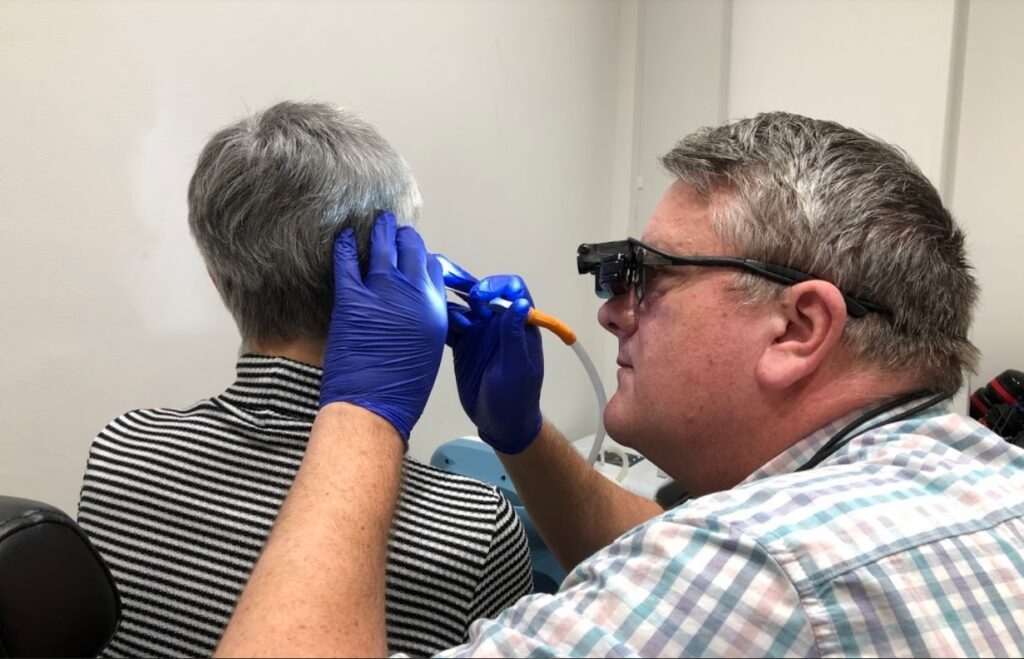
Reviewers often set out the process in order, from the initial consultation and magnified ear inspection through to gentle suction that lifts wax rather than pushing liquid into the canal. Typical comments note that clinicians explained risks and benefits, sought consent, and checked the tympanic membrane before starting. Patients frequently report hearing a soft suction noise, feeling brief tickling, and experiencing no sharp pain. Immediate outcomes commonly include clearer hearing, improved phone conversations, and more comfortable use of headphones or hearing aids.
- Procedure sensation: many describe a quiet suction noise and a feeling of material being removed, not a forceful stream of water, which most found reassuring.
- Immediate outcome: after treatment reviewers report clearer hearing in busy places, reduced pressure, and relief from ear fullness that had affected sleep or concentration.
- Initial consultation: reviewers mention a calm discussion about symptoms, past infections and hearing aid use, which helps tailor the microsuction approach.
- Aftercare advice: people value concise guidance to avoid inserting objects into the ear and to contact the clinic if pain or discharge occurs.
- Otoscope inspection: patients appreciate the clinician using magnification and a focused light to assess impaction and the eardrum before proceeding.
Curiosities and Local Oddities in Kingston
- Haunted Druid’s Head Pub
The town’s oldest pub, dating to 1533, is said to host the ghost of a Roundhead soldier; staff report footsteps in the cellar and the occasional moving tankard, which locals blame on a resident “beer-loving spook”. - The “Bored King’s Throne”
Locals jokingly call the Coronation Stone the “bored king’s throne” because of its plain look. In 2016 a TikTok trend saw teens reenacting coronations wearing Burger King crowns. - Kingston Regatta’s Rowdy Past
Established in 1858, the regatta once drew huge crowds and was called “a carnival of drunkards” by a Victorian paper, though today’s events focus on cream teas and brass bands. - Coronation Stone Legacy
The Coronation Stone outside the Guildhall is linked to Saxon coronations, including kings like Æthelstan in the 10th century. Local legend says the stone “groans” on royal anniversaries, a tale revived during Queen Elizabeth II’s 2022 memorial. - The Out of Order Phone Boxes
David Mach’s 1989 sculpture of tilted red phone boxes on Old London Road, known as “The Falling Kiosks,” is a Kingston icon and a popular photo spot for visitors. - Kingston’s Fake Viking Ship
The so-called Kingston Viking Longship at the town museum is a 19th-century replica made to attract tourists; historians note its historical inaccuracies, yet it remains a beloved local curiosity. - Oldest Surviving Bridge
Clattern Bridge, from the 12th century, is among Britain’s oldest surviving river crossings. Its name recalls the clatter of medieval horses, and restoration work revealed Tudor graffiti of a griffin. - Time Capsule Under the Guildhall
A 1935 renovation buried a time capsule under the Guildhall containing a 1934 newspaper and a ration book, intended to be opened in the year 3035 if the building endures. - John Galsworthy’s Hometown
The novelist behind The Forsyte Saga was born here in 1867; his childhood house is now a dental practice, and fans leave typewriter-shaped tributes at his Guildhall statue. - Kingston University’s Artistic Clout
Founded in 1899, the university’s art school trained famous names like David Hockney; the Knights Park campus degree show draws galleries and scouts each year. - Medieval Mint Town
Kingston was once a royal mint under Alfred the Great, and in 2020 a rare 9th-century silver penny stamped “CYNINGES TUN” was found near the Thames. - The Bentall Centre’s Retail Empire
The shopping centre opened in 1991 on the site of the 1867 Bentalls store; Frank Bentall is credited with bringing Santa’s grotto to Britain in 1888, a tradition the town still enjoys. - Hogsmill River’s Sewage Surprise
In 2018 fatbergs caused dramatic sewage issues along the Hogsmill, prompting the Environment Agency to install large “fat traps” that have become a quirky talking point on riverside walks. - The Bentalls’ Secret Tunnels
Rumours persist of tunnels linking Bentalls to the Thames used to move goods during wartime; bricked-up passages found in 2001 were judged too unstable for explorers. - The Bentall Centre’s Retail Empire
This shopping hub stands where Bentalls once traded and keeps local retail history alive with events and seasonal attractions that pull shoppers into Kingston town centre. - Eadweard Muybridge’s Pioneering Work
The Victorian photographer who advanced motion studies lived here; his 1878 “horse in motion” experiments influenced early film, and a mural on Fife Road celebrates his achievements. - Ancient Market Rights
Kingston’s market charter dates to 1242 under Henry III; the modern market still operates near All Saints’ Church, now selling artisan foods rather than medieval wool. - The Coronation Stone Heist Attempt
In 1985 thieves tried to steal the Coronation Stone but abandoned it in a wheelbarrow outside the Guildhall with a note reading “Too heavy. Fix your security.” The stone was later secured with strong clamps. - Secret Pagan Stone Circle
A hidden stone circle once appeared in Canbury Gardens in 2002, removed by the council, yet locals still leave offerings at the site during solstices. - Ear Wax Removal in Kingston
Microsuction ear wax removal is available from the specialists at Hearing First Kingston on Mondays at Therapy Spaces on St James' Road, a short walk from Surbiton station in KT6. Book a slot online.
Quality Signals in Five-Star Reviews
What top-rated testimonials emphasise
Top-rated feedback for microsuction appointments usually highlights clinician skill, clear step-by-step explanations, and an efficient visit. These accounts stress immediate clinical benefits such as restored clarity in conversation or being able to return to work without a blocked ear distraction. Trust builds when reviews describe diagnostic steps, mention micro-instruments and visual confirmation of wax removal, and note a tidy, organised consultation room. Many also praise staff for managing anxiety and following up by phone with helpful answers to further questions.
Common practical praises
- Follow-up guidance for wax prevention and gentle ear care, which reviewers found valuable for avoiding repeat blockage.
- Respectful handling of hearing aids and clear advice on protection, especially appreciated by older patients who rely on amplification.
- Short waiting times combined with precise appointment reminders, making the journey from Kingston station less stressful.
- Clear billing and transparent pricing, where patients felt private microsuction offered good value for timely relief and clinician expertise.
- Comfortable seating and a neat clinical setting, details that reinforced a sense of professionalism and safety.
Compact guideline for readers
If a review names the instrument used, the clinician, and lists a practical aftercare step, it usually signals a thorough and credible patient account.
Microsuction Compared with Ear Syringing
Many people in Southwest London report that GP surgeries no longer provide ear syringing. This change is partly due to funding pressures, but also because ear syringing carries greater risks than microsuction. Possible complications from irrigation include ear infection, hearing loss, tinnitus, perforated eardrum, and pushing wax deeper into the canal. It is therefore understandable that patients are turning away from walk-in syringing services and seeking microsuction instead. Rising demand has left NHS microsuction services stretched, with waiting lists often reaching two to three months.
You do not need to endure months on a waiting list for microsuction, consider private care to save time. It may be more affordable than you expect, just visit our booking page and you could have your wax blockage cleared this week.
Why Microsuction Is Favoured Over Syringing
Microsuction is generally considered safer than traditional syringing because it uses controlled suction and allows the clinician to see the ear canal directly while removing wax, avoiding forcing fluid into the middle ear. Irrigation can lead to infection, tinnitus, hearing loss or a perforated eardrum, which is why many patients opt for private microsuction to reduce those risks.
The clinician will examine the ear using magnification, explain any findings, and proceed with microsuction only if it is judged safe and appropriate for your ears.
Choosing microsuction often shortens the road to relief from earwax blockage and related hearing difficulties. If you experience ongoing hearing loss or repeated impaction, arrange a follow-up plan with the audiology team to manage wax and protect long-term hearing health.
Booking Experiences and Appointment Logistics
How reviewers describe arranging a visit
Patient comments frequently detail how they booked microsuction appointments, describing simple online forms, telephone scheduling, and receiving confirmation by email or text. Many value clinics that publish clear cancellation rules and offer short-notice slots for sudden problems. Reviewers often mention easy-to-follow directions from Kingston station or short drives from Tolworth and surrounding KT6 areas. Those travelling from places like Epsom or Twickenham appreciate the convenience of available on-street parking when it is an option.
- Online booking: patients praise an intuitive web form showing available slots so they can choose morning or afternoon sessions without calling during busy times.
- Appointment reminders: SMS or email reminders reduced missed visits and increased confidence in the clinic’s organisation.
- Telephone help: callers recall helpful phone advice about Blue Badge parking and the small step at the entrance for mobility needs.
- Clear arrival instructions: directions referencing Therapy Spaces on St James' Road and nearby landmarks make finding the clinic straightforward on the day.
- Short-notice availability: people with sudden ear blockage often mention same-week appointments that prevented prolonged hearing disruption.
Disabled Access Details
The clinic sits on the ground floor, with a small four-inch step into the front door followed by level access throughout the consultation area.
Clinical Professionalism Reported by Patients
Signs of competence and safety
Reviewers routinely praise clinicians’ professionalism, including pre-procedure checks for recent infections or a perforated eardrum and tailored care for people who use hearing aids or have chronic ear conditions. Patients value staff who explain the reasons for choosing microsuction over irrigation, demonstrate instruments, and record consent clearly. Testimonials that reference evidence-based practice, sterile tips, and visible magnification usually inspire greater confidence. Accuracy in describing the ear condition and prompt referral to ENT when needed are also highlighted, aligning with recognised audiology standards and reassuring those seeking private ear care in Kingston.
Many patients report feeling listened to, with risks and benefits explained and safety prioritised over speed during the procedure.
Nearby Clinics
Some of the nearby clinics mentioned by reviewers include:
- Surbiton: Private Microsuction Ear Wax Removal In Surbiton KT6
- Ealing: Private Microsuction Ear Wax Removal In Ealing W5
Accessibility and Disabled Parking Comments
Reports from patients with mobility needs
People using Blue Badges or with limited mobility typically report practical features that helped their visit: the ground-floor setting, a small four-inch entrance step, and temporary on-street parking nearby. Carers note staff assisted with getting wheelchairs into the room and offered seating close to the door. Several reviewers advise phoning ahead to reserve a parking bay or to request arrival instructions, which reduces stress for those with mobility challenges. These local insights are especially useful for visitors from KT6 and surrounding postcodes.
- Advance notice recommended: callers who flagged mobility needs before arrival experienced quicker, smoother visits and less time waiting in corridors.
- Assistance on arrival: caregivers said reception staff helped open doors and guided patients to the consultation space, which they found reassuring.
- Blue Badge parking: reviewers report being allowed to park on restricted lines when displaying a valid badge but advise checking signs for limits and enforcement.
- Accessible seating: patients valued chairs with armrests and a clear route to the clinician, important for older adults with balance issues.
- Street-level access: many noted the small step can be managed with help, and staff will assist to ensure safe entry and exit.
How to Book an Appointment
Private ear wax removal is available by appointment only. You can book an ear microsuction appointment online, or use the button below to secure a slot:
How to Book and Prepare for Your Visit
Appointments are by booking only because of demand. You can book online or by phone and microsuction slots are released regularly to keep waits short. Below are simple preparations and arrival tips to make your visit efficient.
- Confirm contact details and any relevant medical history, for example recent ear infections or a perforated eardrum.
- Choose a date and time that suits you via the clinic booking system.
- Arrive a few minutes early with hearing aids removed if applicable, so the appointment can start on time.
- Bring a list of medications and any hearing devices.
- If mobility is limited, call ahead so staff can advise on disabled access and parking.
- Expect a short consultation, a gentle ear inspection, and microsuction if appropriate.
Safety Comparisons: Microsuction Versus Irrigation
Patient-reported safety observations
Many reviewers contrast microsuction with ear syringing, stating microsuction offers visual control and gentle suction rather than forcing water into the canal. Patients often say clinicians inspected the eardrum before proceeding and only used microsuction when it was safe, lowering the risk of perforation or infection. Several describe prior bad experiences with irrigation that pushed wax deeper, increasing discomfort, and welcome microsuction’s visible removal and reduced complication rate. Testimonials also mention fewer aftercare issues and a quicker return to normal activities after microsuction compared with irrigation.
| Feature | Microsuction | Irrigation |
|---|---|---|
| Visibility | Direct visualisation with magnification, clinician sees wax as it is removed | No direct view of wax, relies on fluid flow which can obscure the canal |
| Risk | Lower risk of perforation when prechecked, controlled suction | Higher risk of pushing wax deeper, potential for middle ear irritation |
| Patient comfort | Often comfortable, brief suction sounds and sensations | Some patients find water pressure uncomfortable and report dizziness |
More Information
Find further details about our Kingston ear wax removal service here on Global Medical Networks.
Common Themes in Negative Feedback and How Clinics Respond
Typical practical concerns raised by some patients
Negative feedback is uncommon but when it appears it usually concerns narrow parking spaces, a short wait if a prior consultation overran, or discomfort while removing particularly hard wax. Constructive criticism often highlights communication gaps, for example better pre-visit instructions on removing hearing aids or clearer directions from local bus stops. Practices that reply openly to reviews and offer remedies tend to restore confidence quickly. This pattern shows how transparent responses and proactive customer care shape local testimonial culture and help potential patients judge accessibility and clinical standards.
- Procedure discomfort: a few reviewers describe brief unease when extremely compacted cerumen was removed, and welcomed clinicians who paused and checked comfort frequently.
- Follow-up clarity: many constructive reviews ask for more explicit advice on symptoms that should prompt a return, such as persistent pain or discharge.
- Waiting time variability: some mention short overruns when earlier appointments needed extra time for complex cases.
- Parking frustrations: reviewers sometimes report narrow bays and busy street parking at peak times, advising an earlier arrival to secure a spot.
- Pre-visit guidance: several patients asked for clearer instruction about removing hearing aids and bringing medication lists, which improved later visits.
Video: What to Expect at Your Kingston Ear Wax Appointment
Areas Served and Traveller Tips from Reviewers
Where patients travel from
Reviews show people travel from Kingston, Surbiton, Tolworth, New Malden and other nearby suburbs for microsuction. Some who come from further afield, such as Epsom or Cobham, combine their appointment with errands in the town centre, for example shopping at the Bentall Centre. Comments commonly praise easy rail links to Kingston station and suggest walking routes to St James' Road. Drivers are advised to check pay-and-display options and restricted hours on local streets to avoid fines. These crowd-sourced travel tips complement official maps and help new patients plan trips to the KT6 clinic.
- Rail travellers report a five to ten minute walk from Kingston station, advising a quick map check to find the most direct route to St James' Road and Therapy Spaces.
- Out-of-area patients often book early appointments to avoid peak traffic and make parking easier, a tip repeated in many reviews.
- Drivers recommend the nearby pay-and-display car park as a reliable fallback when on-street bays are full, and suggest using a mobile payment app for convenience.
- Bus users advise alighting at stops with signposted routes to the clinic and walking the final short distance with street names and numbers as guides.
- Cyclists point out secure bike racks near local shops and suggest locking bikes in view if spending time in Kingston town centre afterwards.
Parking Options
There are on-street pay-by-phone or metered bays directly outside the clinic, and an off-street pay-and-display car park about a two-minute walk away.
Frequently Asked Questions Highlighted by Reviews
Questions patients often raise after reading testimonials
Frequent patient queries cover procedure duration, likely discomfort and whether hearing aids can be reinserted immediately. Clinician replies in comments typically say appointments last around 20 to 30 minutes, most patients tolerate microsuction well with only minimal noise, and hearing aids can usually be refitted once the ear is dry and comfortable. Other common questions ask about treating children, managing recurrent wax and whether private treatment may be covered by some insurers. These Q&A-style comments help reduce uncertainty for newcomers and often recommend bringing a medication list and any ENT letters to the appointment.
- Will wax come back: reviewers note a small proportion experience recurrence and were given advice on safe ear hygiene and follow-up intervals to manage repeat impaction.
- How long does it take: many report appointments are under half an hour, covering consultation, inspection, microsuction and brief aftercare guidance.
- Is it painful: most say discomfort was minimal, a mild sensation rather than sharp pain, and clinicians paused on request to reassure patients.
- Can children be treated: those who brought children describe staff experienced in gentle explanation and distraction techniques, and suggest booking a paediatric slot if offered.
- Insurance and cost: several reviewers mention some private policies contribute to the fee, but advise checking individual plan details before booking.
Book your Kingston microsuction appointment today, and remove the discomfort of ear wax
Our microsuction clinic in Kingston also treats clients from Kingston-Upon-Thames, Surbiton, Tolworth, Thames Ditton, East Molesey, West Molesey, Hersham, Claygate, Chessington, Hampton Wick, New Malden, Norbiton, Worcester Park, Bushey Park, Teddington, Twickenham, Sunbury-on-Thames, Cobham, Oxshott, Stoke D’Abernon, Stoneleigh, Ewell, Epsom, Leatherhead and Feltham.
How to Leave a Useful Review and What to Include
Practical guidance from patient examples
Helpful, reliable reviews include concrete clinical and logistical details: the nature of the ear problem before treatment, the clinician’s name where allowed, the date or month of the visit, and clear outcome statements such as better hearing in daily life or relief from ear pressure. Useful reviewers also describe the booking process, travel time and any accessibility notes, which helps others plan. Constructive criticism that names specific issues, for example parking constraints or a short delay, along with how the clinic resolved them, is particularly valuable for prospective patients.
- Be specific about the outcome: explain whether speech clarity, headphone comfort or hearing aid performance improved after microsuction.
- Include clinical details: state if you had hearing loss, tinnitus or a blocked feeling before treatment and describe the change afterwards.
- Mention logistics: note the clinic name, general KT6 location, travel time from Kingston station and parking to help others plan their trip.
- Acknowledge staff behaviour: comment on clinician communication, patience and any follow-up advice, which helps assess professional standards.
- Report aftercare events: if you experienced later symptoms, say how the clinic responded and whether further care was advised to give readers a fuller picture.