Private Microsuction Earwax Removal in Surbiton KT6 — Book Appointment
Content Last Updated on 25 February 2026 at 11:17
Our Surbiton ear wax removal clinic is based in Therapy Spaces on St James' Road, only a short walk from Surbiton station. There is pay-by-phone on-street parking outside, and the clinic is easily reached on the ground floor, which helps with accessibility for patients with mobility needs.
Private Microsuction Earwax Removal in Surbiton KT6, Secure Your Appointment

Arrange a private microsuction appointment in Surbiton KT6 and benefit from clinical ear care delivered by an experienced practitioner in a focused, professional environment. Our clinicians perform a concise audiology screen, careful otoscopy and precise microsuction under direct vision, which keeps the procedure controlled and safe. Appointments are allocated time for a short case history and consent, the procedure itself, and a brief aftercare discussion, which supports thorough clinical records and avoids rushed care.

We offer online booking for same-week appointments when slots permit, and we make suitability clear up front, for instance when there has been a previous perforation or ear surgery. The team documents cerumen and any tympanic membrane findings before treatment; you will receive written aftercare and tailored advice for future ear canal maintenance if required. For queries about fees, parking or access in KT6, please contact reception and we will explain the consultation and any necessary adjustments.
How to Book Your Appointment
Reserve a timed online appointment to help maintain efficient clinic flow and social distancing, or call reception to discuss suitability and pre-visit guidance such as avoiding cotton buds and providing a brief medical history. We also give travel advice and can assist with permit or parking information so you arrive in good time.
Booking Appointments

Private ear wax removal is available by appointment only due to demand. You can secure an ear microsuction appointment online, or use the button below to go directly to our booking page:
Location and Directions to St James Road Clinic
The clinic is housed within a shared therapy suite on St James Road in Surbiton, roughly midway between the high street and the station. For the clearest route, enter postcode KT6 4QH into your mapping app and follow pedestrian signs from Surbiton station: it is a short, well-lit walk suitable for most visitors, and local landmarks such as the station forecourt, the shopping parade and a small park are useful references for taxi drivers or friends collecting you.
If you are arriving by train, use the high street side station entrance and follow signs to St James Road; the clinic occupies a ground-floor space in Therapy Spaces and is clearly signed. Please allow an extra five minutes on your first visit to register and complete a brief hearing check before treatment, and keep a copy of your booking confirmation and the clinic telephone number handy in case you need to call if delayed.
Public Transport Advice
For precise door-to-door directions use a navigation app set to walking mode, which will show pedestrian shortcuts and crossing points; trains to Surbiton run frequently from central London and local bus routes serve the high street. If you travel with mobility aids, check lift availability at the station and look for any service alerts before you travel.
Interesting Surbiton Facts and Local Stories
- Seething’s Secret Society
Local writer John Finnemore imagined the whimsical Seething community, which stages eccentric events like the World Worm Charming Championship and playful festivals celebrating the quirks of suburban life. - Surbiton’s Unsolved Murder
The 1873 killing of grocer Albert Cooper, found in his shop, remains an open mystery and inspired amateur sleuths to trawl local archives, with seasonal true-crime walks organised to revisit the cold case. - Surbiton Film Festival’s Humble Roots
Started in 2006 at the local Odeon, this compact festival highlights indie films judged by residents, and its tongue-in-cheek Golden Cabbage Award honours the area's market garden history. - The Lost Surbiton Lagoon
Once nicknamed Surbiton-on-Sea, a 1934 open-air lido with sandy beaches and diving boards closed in 1980; older locals still recall summers accompanied by big band music and ice-cream vans. - The Good Life’s Surbiton Connection
The 1970s sitcom The Good Life was set in Surbiton, and its fictional address inspired a real-life interest in home-grown produce, with locals tending vegetable patches and keeping chickens. - The Antelope’s Highwayman Past
Local legend says the 17th-century Antelope pub once sheltered highwayman Claude Duval; storytellers claim a ghost in a tricorn hat still appears to order a vanished ale from time to time. - Railway Boomtown
Surbiton transformed after 1838 when the London and Southampton Railway arrived, promoted as London’s countryside, which attracted Victorian commuters with promises of fresh air and fast trains to Waterloo. - Punk Poet’s Suburban Hideout
John Cooper Clarke lived in Surbiton during the 1980s and penned wry pieces inspired by local life, including lines about hiring a car from a neighbourhood garage. - Surbiton Writers’ Circle
Established in 1947, the group once included J.G. Ballard, who drafted parts of Crash while living locally; early meetings took place in what is now a pub with framed memorabilia. - St Mark’s Church Spire Collapse
In 1955 the church spire fell during a storm and was rebuilt by 1960; the original weathervane, bent by the event, is preserved in the vestry. - Surbiton Station, an Art Deco Icon
The 1937 redesign by J.R. Scott gave Surbiton Station its distinctive Art Deco look; its sunburst clock and sweeping lines have become local pride and a popular photo subject. - The Antelope’s Highwayman Past
Legend has it that highwayman Claude Duval once used a Surbiton inn as a hideout, and tales of polite robberies and ghostly coins persist in pub folklore. - 1984 UFO Panic
An alleged triangular craft sighting near Tolworth Tower in October 1984 made headlines, later attributed to a rogue weather balloon, but locals still recall it as Surbiton’s most famous close encounter. - The Surbiton Mermaid Myth
A 19th-century hoax presented a stitched-together 'mermaid' displayed locally; today a bronze mermaid statue in Claremont Gardens winks at passers-by as a nod to the story. - Coronation Clock Tower Mystery
The 1902 Coronation Clock Tower reputedly contains a time capsule with a cryptic note and local lore claims it includes a recipe for 'Surbiton Pudding', due to be opened in 2102. - Pumpkin Parade Cult Classic
Each October St Andrew's Square hosts a large pumpkin parade, once going viral when a politically topical gourd won best-in-show for its resemblance to a public figure. - Tumble Down Dick Pub’s Royal Slur
The pub's name mocks Richard Cromwell, and local ghost stories claim his spirit fumbles through the beer garden, tripping over imagined cobbles. - Secret Underground Tunnels
Rumours of Victorian smuggling tunnels beneath Surbiton Station surfaced when engineers found bricked passages in 2003, prompting more than a little local speculation about buried gin. - Surbiton Racket & Fitness Club
Dating from 1881, one of England's oldest clubs hosted a 1923 match that some say inspired Agatha Christie, though members insist their only crimes are poor backhand shots. - Legend of the Surbiton Squirrel
The oversized albino squirrel known as Snowball became a local celebrity in the 1990s and inspired a children's book, though sceptics say it was probably just a notably pale regular squirrel.
Parking Near the Surbiton Clinic: Options and Advice
Short-term on-street parking is available on St James Road via pay-by-phone or meters, and an off-street pay-and-display car park lies within a two-minute walk of the clinic. Roadside bays are convenient for brief visits but please check signage for maximum stay and tariffs, as rules vary. For longer stays, the nearby public car park is often easier and tends to have free spaces outside peak shopping hours.
When driving, allow a little extra time to locate a legal bay and walk to the clinic entrance. Consider parking slightly further away to avoid congestion on the high street during busy periods. Payment is usually by card or app, and staff can point you to the most convenient bays if you call ahead to confirm your appointment.
Parking and Drop-off Practicalities
- If you intend to use a taxi or private hire, ask the driver to set you down on the high street side of the station to minimise walking with luggage or mobility aids.
- Motorcyclists will find a few designated motorcycle bays near the high street; if unsure about exact placement, call reception for directions on where to leave a helmet and kit.
- For short drop-offs, the kerbside area near the clinic entrance is the easiest place to alight, especially helpful if you have an ear condition that makes walking uncomfortable.
- Check pay-by-phone instructions in the bay to avoid fines, and keep the transaction receipt on your phone until after the appointment in case enforcement queries arise.
- If you prefer off-street parking, the pay-and-display car park two minutes away usually offers accessible bays and clear pedestrian routes to St James Road.
Blue Badge Holders: Information
Blue badge holders may use designated bays or permitted exemptions where applicable; please display your badge clearly and inform reception on arrival so staff can advise on the nearest convenient kerbside point for easy access.
Driver Tip
Arriving 10 minutes early at peak market times can help secure parking and reduce stress, supporting timely clinic flow and a calm appointment experience.
Video: What to Expect During Your Surbiton Ear Wax Removal Appointment
Disabled Access and Ground-Floor Facilities
Our Surbiton clinic is on the ground floor with level access from the pavement, making it suitable for wheelchair users and others with mobility requirements. Doorways and treatment spaces are laid out to enable comfortable transfers and positioning, and seating is provided in the waiting area for those who prefer not to stand. The arrangement reduces additional steps and supports safe patient handling during otoscopy and microsuction procedures.
We keep corridors clear and minimise potential obstacles in communal spaces to make arrival and departure straightforward. If you need assistance on the day, tell reception on arrival and a member of staff will accompany you to the clinical room. There is space for a carer or companion to sit with you during assessment and treatment if required.
Access Checks Clinicians Will Make
Before treatment clinicians will ask about mobility, recent falls and any equipment you use, so they can plan safe seating and transfers. This helps prevent unexpected movement during otoscopy or microsuction and ensures positioning is handled with dignity and care.
Microsuction Compared with Ear Syringing
Many GP surgeries in Southwest London no longer provide ear syringing, partly due to funding and partly because syringing carries higher risk compared with microsuction. Possible complications of irrigation include ear infection, hearing loss, tinnitus, perforation of the eardrum, and further impaction when wax is pushed against the membrane. As awareness grows, more patients choose microsuction for safety and precision, but demand has risen sharply and NHS microsuction clinics often have waits of two to three months.
You do not need to wait months for microsuction privately. Consider booking privately to save time and restore hearing more quickly; it is often more affordable than expected. Simply visit our booking page and you could have a microsuction appointment this week.
Benefits of Microsuction and Treatment Steps
Microsuction is a targeted technique for removing ear wax and debris from the canal, favoured because it lowers the chance of perforation or pushing wax further toward the eardrum, risks associated with irrigation. It is commonly combined with basic audiology checks and careful otoscopy.
- Final check, hearing reassurance and short aftercare advice to reduce re-accumulation.
- Gentle microsuction carried out under direct vision with a microscope or video otoscope.
- Initial assessment and otoscopy to inspect the ear canal and confirm presence of cerumen.
For many patients microsuction is quicker, more comfortable and clinically effective; you can book online or phone reception for advice on suitability, particularly if you have a history of perforation or recurrent blockage.
Booking, Availability and Fees
Private microsuction appointments are scheduled by booking only, reflecting demand and the need to allocate sufficient clinical time for assessment, the procedure and aftercare. Booking online is the quickest way to secure a slot; our system displays available dates and times for each clinician so you can choose what suits your diary. Alternatively, call reception to discuss suitability, urgent needs, or to be added to a same-week list if cancellations occur.
Fees are shown clearly on the booking page and include pre-treatment assessment, otoscopy, the microsuction procedure and a concise written aftercare summary. We aim to be transparent about any additional costs that may arise, for instance if extra diagnostic tests are advised or specialised equipment is required for complex canals.
After You Book: What to Expect
- Attend the clinic five minutes early to allow registration and a baseline audiology check before otoscopy and microsuction begin.
- Receive immediate confirmation by email or SMS with the appointment time, clinician name and the clinic address including postcode KT6 4QH for navigation.
- If treatment is unsuitable on the day the clinician will explain alternatives, such as watchful waiting, ear drops or referral to ENT for more complex care.
- Complete a short online or phone medical history that flags previous ear surgery, perforation or anticoagulant medication to support safe planning.
- After treatment you will be given aftercare instructions and contact details for any follow-up questions, with advice on preventing recurrence and when to seek prompt review.
Cancellation and Rescheduling Policy
Please give at least 24 hours notice for cancellations or changes, this lets us offer the slot to another patient and keeps the clinic running smoothly. Late cancellations may incur a fee depending on the booking terms and local policy.
Quick Tip
If you are taking blood-thinning medication tell reception when booking so the clinician can confirm suitability and avoid last-minute delays.
Further Clarification
For cases where anticoagulation affects treatment we consult with your GP to establish a safe plan, and we proceed only when it is clinically appropriate to do so.
Further Information
You can find additional details about our Surbiton ear wax removal clinic here.
Accessibility
The clinic is situated on the ground floor and has level access for ease of entrance.
What to Expect in Your Microsuction Appointment
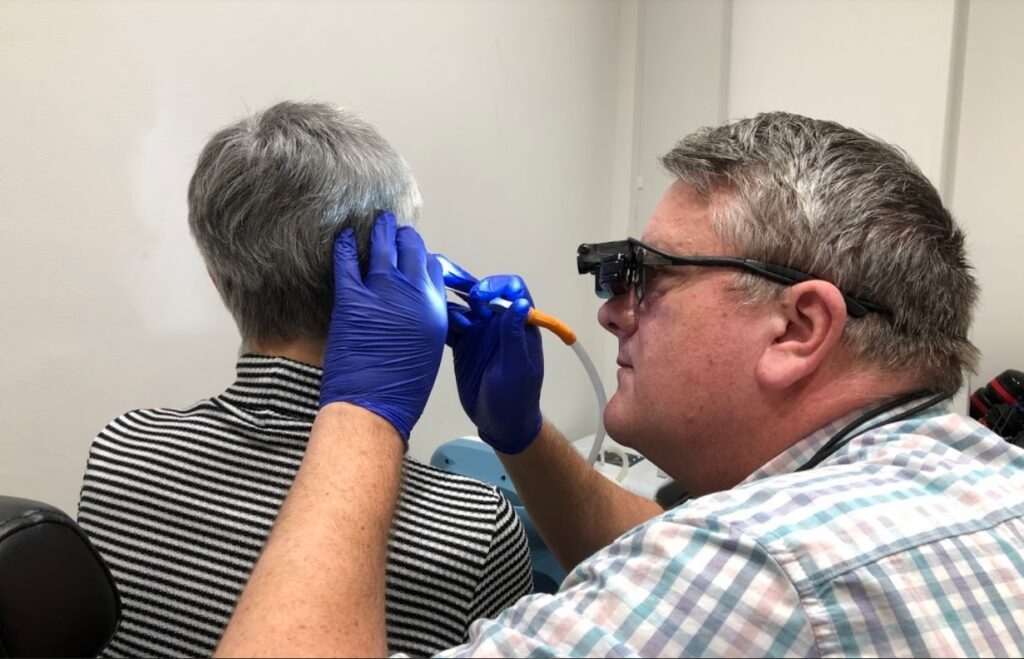
Your visit will typically start with a brief hearing check and otoscopic examination to inspect the ear canal and tympanic membrane. The clinician will describe findings and outline the approach, explaining the instruments used and how microsuction works. The technique uses a suction probe under direct vision via a microscope or video otoscope, allowing careful removal of cerumen without introducing water into the canal, which many patients find less intrusive than irrigation.
Practitioners pause regularly to check comfort and re-examine the canal, keeping communication clear throughout. The clinician will assess for perforations or signs of infection which may affect whether microsuction proceeds on the day. After removal the ear is rechecked and concise aftercare advice is provided, including recommendations for drops, prevention measures and when to return for review.
Procedure Overview: Step by Step
Initial assessment: case history and baseline hearing check, followed by otoscopy to confirm the presence and nature of wax; microsuction: performed under direct vision with fine suction and small probes; completion: final otoscopy and documentation of treatment, with written aftercare instructions provided.
Disabled Parking Details
Blue badge holders may park on double yellow lines for up to 3 hours where local rules permit, please display your badge clearly and follow the guidance posted.
Clinical Differences: Microsuction vs Ear Syringing
Microsuction provides visual control and avoids forcing fluid into the ear canal, which is why many clinicians prefer it for most patients. The controlled suction under magnification reduces the risk of compacting wax against the eardrum, and it is generally safer for ears with prior perforation, previous ear surgery or recurrent impaction. Increasingly GP surgeries refer to specialist clinics for microsuction as irrigation is less commonly offered.
Patients often ask about discomfort; most find microsuction tolerable because clinicians remove material gradually while observing the canal. A small risk of transient sensitivity or minor canal irritation exists, and clinicians will inspect the membrane and discuss any concerns before starting. For complex presentations referral to ENT remains an important safety option, and we maintain clear pathways when further evaluation is needed.
Clinical Factors to Consider When Choosing Technique
Decisions depend on canal anatomy, wax consistency, prior ear disease and patient preference; microsuction is usually chosen for hard or impacted cerumen, narrow canals, or whenever direct visual control is important to avoid perforation risk.
When Irrigation May Be Appropriate
In a small number of instances where microsuction is unavailable or unsuitable, controlled irrigation by an experienced clinician may be considered, but risks and expected outcomes should be fully explained beforehand.
Book your microsuction appointment now, start relieving ear discomfort today
Our Surbiton microsuction clinic also supports patients from East Finchley, Church End, Golders Green, Hendon, Hampstead Garden Suburb, Mill Hill, Barnet, Finchley, Highgate, Crouch End, Hornsey, Harringay, Southgate, Whetstone, Arnos Grove, Osidge, Wood Green and Tottenham.
Meet Our Clinical Team in Surbiton
Our practitioners are registered and experienced in aural care, with training in otoscopy, audiology and microsuction. Each clinician completes regular competency updates and follows local governance and infection control procedures to ensure consistent, high-quality care. We maintain clear clinical records and follow recognised guidance for ear wax removal to support safe practice and good outcomes.
When you visit you will meet a clinician who will introduce themselves, confirm identity and outline their qualifications and role. The team coordinates with reception to provide reminders, pre-visit advice and any follow-up needed. If you would like details about practitioner experience or professional development, ask when booking and we will provide relevant information.
Standards and Patient Safety
All clinicians follow evidence-based ear care protocols, hold indemnity insurance and engage in continuing professional development in audiology and microsuction. Patients are encouraged to ask about the technique, risks and alternatives before treatment.
Surbiton Ear Wax Removal: Map, Location and Directions
You can get directions to our Surbiton microsuction location. Enter your starting point and Google Maps will guide you to the clinic.
Hearing First Surbiton Clinic
Located within Therapy Spaces,
URL: https://www.hearingfirst.co.uk/book-ear-wax-removal-near-me/book-microsuction-ear-wax-removal-surbiton/
Arguably one of the most reliable ear wax removal services in Surbiton, judged by patient feedback; below are a selection of reviews from satisfied clients who valued our care and professionalism.
Surbiton Location and Directions: Quick Guide
Our clinic is a short walk from Surbiton station, located within a shared therapy space on St James Road. For your first visit allow a few extra minutes to check in; we recommend using the high street station entrance and following signs to the ground-floor suite.
- Enter postcode KT6 4QH into your mapping app for the most direct walking route.
- Look for the Therapy Spaces frontage a few minutes from the main concourse, it is simple to spot on foot.
Please arrive five minutes early so the clinician can complete a brief audiology check and otoscopy before any microsuction treatment, this supports safe removal and accurate clinical documentation.
Aftercare, Preventing Recurrence and Home Care
Aftercare is an important part of the service and includes both verbal explanation and a concise written summary on ear care after microsuction. Typical recommendations cover using clinician-approved ear drops to soften cerumen if needed, avoiding cotton buds and drying ears carefully after showering. We advise against inserting objects into the ear canal and suggest tailored maintenance strategies to lower the chance of recurrence, taking into account factors such as natural cerumen production and hearing aid use.
For recurrent blockages we discuss longer-term plans such as scheduled maintenance appointments or targeted preventive drops, and we can set follow-up intervals that suit your needs. If you experience new symptoms after treatment, such as severe pain, discharge or sudden changes in hearing, contact the clinic promptly for review or referral to urgent ENT if clinically necessary.
Practical Self-Care Steps
- Avoid inserting cotton buds or other implements into the ear canal, as this commonly pushes wax deeper and can cause abrasions.
- Use clinician-recommended ear drops for a few days when advised, following instructions precisely and attending the review to ensure the wax has softened appropriately.
- If you swim regularly consider moulded ear plugs to protect the canal, and dry ears gently after water exposure to reduce moisture-related irritation.
- Clean in-ear hearing devices and earphones frequently and allow the ear canal to breathe to reduce wax build-up around device tips.
- Arrange maintenance appointments at intervals recommended by your clinician if you have a history of frequent impaction, to prevent acute blockages affecting hearing or comfort.
Nearby Clinics and Options
Here are some of our neighbouring clinics you may wish to consider:
Alternative Locations in Southwest London
If Surbiton is not convenient, we operate other private microsuction sites across southwest and greater London where the same clinical standards apply. Selecting a nearby location can reduce travel time and may offer earlier appointment availability; each site follows the same booking procedures, treatment protocol and aftercare guidance so quality and safety remain consistent. To transfer an existing booking to another clinic contact reception who can advise on options and any site-specific access notes.
Satellite clinics can be useful if you need a particular appointment time or are travelling from adjacent boroughs. All sites publish opening times and clinician details online and accept the same booking methods for convenience; check the postcode and access arrangements before attending an alternative clinic to avoid unnecessary delay.
Recommended Nearby Clinics
- Twickenham clinic: easy parking and ground-floor access for car travellers, staffed by experienced otoscopy-led microsuction clinicians.
- Wimbledon clinic: central location with excellent public transport connections and frequent emergency cancellation slots for last-minute needs.
- Kingston clinic: convenient for Kingston and areas to the south, offering extended hours on selected days for patients who work during typical daytime times.
- Richmond clinic: popular with commuters, combining microsuction with brief audiometry and aftercare suited to swimmers or hearing aid users.
- Ealing clinic: established microsuction service with accessible reception, regular appointment availability and clinicians experienced in complex cerumen management.
Parking
There are on-street pay-by-phone or metered bays outside the clinic, and an off-street pay-and-display car park about a two-minute walk away for longer stays.
Parking and Access Notes: Summary
- On-street pay-by-phone bays run along St James Road, check bay signage for tariffs and time limits.
- A short walk away there is a pay-and-display car park useful if you prefer off-street parking.
- Cyclists can use nearby Sheffield stands, and there are kerbside drop-off points to assist patient access.
If you are bringing a blue badge please observe local disabled parking rules and bring your badge when you visit; staff can advise on the closest convenient kerb access to help a smooth arrival.
Local Context: Surbiton Community and Practical Considerations
Surbiton is a commuter-friendly town with a strong local community and our clinic is part of a wider network of services that support patient needs beyond a single appointment. Nearby pharmacies, GP surgeries and ENT departments are within easy reach which supports prompt onward care when needed. The high street mix of shops, cafes and transport links makes attending appointments straightforward for residents and visitors from neighbouring districts.
Local community resources such as libraries, community centres and walking groups can assist those with mobility or transport challenges; if you need help arranging travel or getting to the clinic, tell us when booking and we will signpost local services. The clinic aims to be reliable and communicative, fitting into the community by offering consistent appointment times and practical information to make access to ear care predictable and manageable.