Keeping You Connected With Medical And Health Professionals Worldwide
Branches - Global Medical Networks: Find Clinic Locations Near You
This Article Modified on 27 Apr 2026, 16:29
Branches – Global Medical Networks: Locate a Clinic Near You
Knee Arthritis Treatment with Robotic AI / avoid surgery #avntreatment #kneepain #kneearthritis • Watch on YouTube
Quick ways to find a nearby clinic
Use our clinic finder or site map to locate a site, arrange an appointment and review practical details within minutes. People commonly look for clear opening times, travel guidance and reassurance that audiology, earwax removal and diagnostic tests are provided by registered clinicians. This page helps UK patients confirm clinical accreditation, payment options and insurer arrangements, and outlines what happens at a first visit, including consent, clinical records and follow up. We focus on accurate, transparent contact information so you can call, email or book online with confidence.
Insurance భారీ మోసాలు | Never BUY This Insurance: https://JoinTelegram.openinapp.co/DayTraderTelu
Look for a published price list and Waxfree or similar guarantees to show transparent billing, refund terms and a clearly defined scope for earwax removal services.
Check patient reviews and verified outcomes when available, since real world feedback can indicate appointment flow, waiting times and the clinic’s infection control practices.
Search by town, postcode or region to find practices offering microsuction and hearing assessment, using filters for wheelchair access and parking near each address.
Confirm clinician qualifications and professional registration before booking, because regulated audiologists and ENTs provide safer, evidence based care and clear referral routes when needed.
Use public transport details and map links to plan journey times, step free access and nearby facilities, making visits more practical for older people or carers.
Global Medical Networks runs a spread of clinics across England and nearby areas, delivering consistent audiology and primary care services at multiple locations. This reach supports continuity of care, shared clinical governance and standardised patient pathways. Every branch follows the network’s quality assurance checks, clinical audits and local governance, so patients can expect comparable standards whichever site they attend. The model also enables cross referral to other clinics when ENT input or advanced diagnostics are required.
Insurance భారీ మోసాలు | Never BUY This Insurance • Watch on YouTube
First Class Orthopedic Surgery #shorts: Operating room mornings are always 'first class' - inside the operating room with Doctor Cory Calendine, Orthopaedic Surgeon #surgeonlife #orthopedics #operatingroom
How regional presence benefits patients
Accessible information: each branch page publishes address, parking, contact and public transport details to help plan visits, including guidance for those with reduced mobility or carers.
Local appointment availability: several nearby sites in a conurbation can shorten waits, provide weekday and weekend slots and reduce travel for routine microsuction and hearing checks.
Coordinated referrals: when ENT or audiological rehabilitation is needed, the network can pass records and outcome measures with the patient to preserve continuity of care.
Local commissioning and private options: branch listings clarify whether each site accepts NHS referrals, operates private-pay pathways or works with insurers.
Choosing the best branch for your needs
Choose branches that clearly display clinician registration and recent patient feedback if you need specialist care, for example paediatric audiology or complex ear procedures. This helps set expectations and ensures the right expertise is available for your situation.
Additional clarification
If specialist ENT involvement may be necessary, pick a branch that documents direct referral routes and formal links with hospital ENT teams, so investigations and surgical planning proceed without delay.
What each clinic profile shows
Key details listed for every branch
Each clinic profile includes the practical facts you need at booking: full address, phone number, parking and public transport, clinician qualifications, opening hours and the services on offer. We list specific options such as microsuction earwax removal, hearing assessments, cerumen management and routine ear checks, along with information about infection control and consent processes. Clear service descriptions let patients and referrers judge whether a clinic meets both clinical requirements and logistical preferences.
Clinician credentials: profiles display professional registration and clinical interests, useful for those seeking experience in paediatric audiology, balance assessment or vestibular rehabilitation.
Access and facilities: profiles detail step free access, parking availability, public transport routes and whether waiting rooms have space for carers and vulnerable adults.
Detailed contact details: each branch shows a main telephone number and email address so you can ask about clinician availability, appointment length and required paperwork.
Payment and referrals: the profile explains whether a clinic accepts NHS referrals, self funding or insurer contracts, avoiding unexpected bills.
Service range: branches state which diagnostic tests and treatments are offered, for example tympanometry, pure tone audiometry or manual instrument earwax removal, so patients can choose the right site.
These consistent details support informed choices, reduce unnecessary calls and ensure patients attend a branch suited to their clinical and practical needs, improving the overall experience of care.
Booking, appointment types and triage
How to book and what happens at triage
Book online or by phone according to the branch’s systems, and expect a short triage to confirm the reason for attendance. Triage verifies that the clinic can provide the right service, highlights contra-indications to microsuction and checks whether same day assessment is safe. Reception will usually ask about symptoms, prior ear surgery, anticoagulant medication and any acute pain or discharge. This step protects patient safety and ensures urgent referrals are prioritised when red flags arise.
Appointment formats and typical durations
Telephone or video triage is available at some sites to assess urgency and offer pre-appointment advice, cutting unnecessary travel and speeding access for patients with mobility needs.
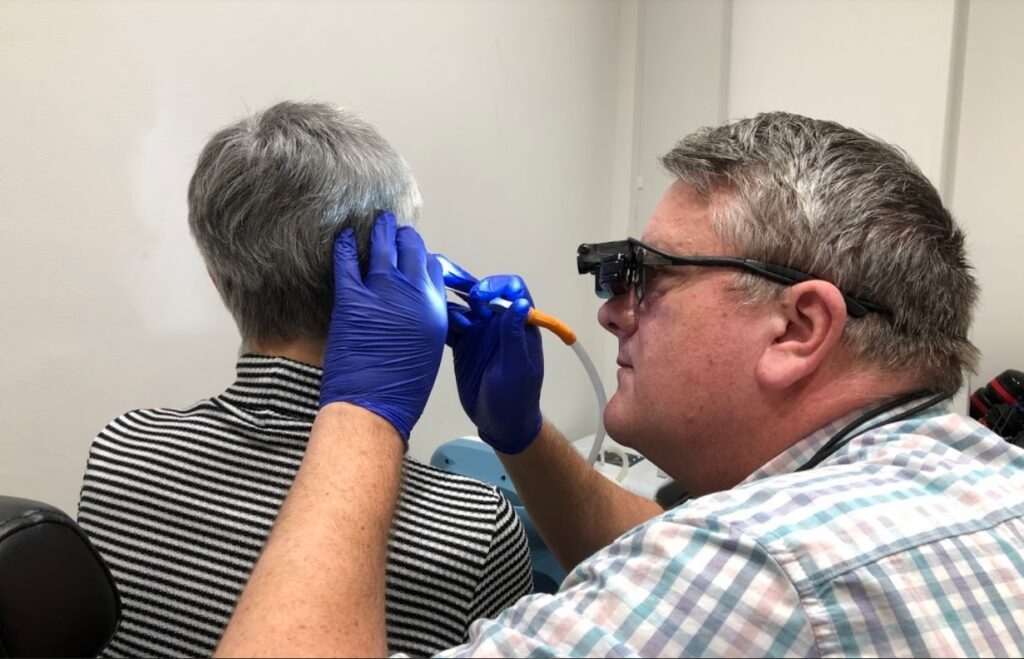
Standard face to face appointments generally last 20 to 30 minutes, covering case history, otoscopy and microsuction or manual instrument removal if needed, with aftercare advice recorded in clinical notes.
Emergency slots may be held daily in some clinics for acute ear pain, sudden hearing loss or suspected foreign bodies, enabling prompt ENT assessment and early intervention when needed.
Follow up appointments concentrate on outcomes, hearing changes or referral planning and are booked based on clinical need and patient preference to maintain smooth care pathways.
Longer appointments are offered for complex cases, such as recurrent infections, paediatric assessments or combined audiology and tinnitus reviews, allowing a thorough evaluation without rushed decisions.
Top tip for booking
Have your medical history and a list of current medicines ready when booking, because accurate information at triage reduces delays and helps clinicians prepare any necessary equipment.
Clinical governance and quality standards
How the network maintains safe, evidence based care
Branches operate within a shared clinical governance framework that includes checks on clinician registration, mandatory training, audits and incident reporting. This network approach supports evidence based practice, peer review and ongoing improvement. Protocols for microsuction, manual earwax removal and hearing tests are guided by professional recommendations, with clear escalation to ENT specialists if pathology falls outside branch scope. Patients should expect documented consent, infection prevention measures and audit-based outcome reporting where available.
Data protection and secure records comply with UK law, explaining how clinical data is stored, shared and used when referring or ensuring continuity of care.
Incident reporting and root cause analysis procedures exist for any adverse event, with transparent corrective actions and system improvements communicated through governance channels.
Regular competency checks are completed for clinicians, maintaining procedural skills, sterile technique and accurate documentation in line with recognised professional standards and local policies.
Safeguarding policies and DBS checks for staff are standard, protecting children and vulnerable adults who may attend for paediatric audiology or family appointments.
Clinical audit cycles track outcomes, complication rates and satisfaction, with results used to refine practice, update training and publish quality metrics for branch performance.
Access and travel guidance
Practical information on getting to a branch
Each branch page lists step free access, nearby bus and train services and local parking, including on site bays and pay and display options. This helps patients with reduced mobility, carers or those using public transport to plan journeys accurately. Branches note whether lifts, ramps and accessible toilets are available, and whether extended appointment times can be booked for slower mobility or sensory needs. Accessibility statements are reviewed periodically to reflect building work or temporary changes.
Support for patients with additional needs
Quiet times are suggested for people with sensory sensitivities, with branches offering earlier or later bookings to avoid busy waiting areas when requested in advance.
Carer accompaniment: policies explain whether carers can attend without extra charge, and whether extra seating or private consulting space is available for confidential discussions.
Parking concessions are noted for patients with blue badges, plus directions to the nearest short stay bays to reduce walking distances for less mobile visitors.
Branches record availability of hearing loop systems, large print appointment letters and BSL interpreter booking options, improving communication for people with hearing loss or language needs.
Transport assistance: some sites list community transport services and volunteer schemes that can help patients without private travel, useful in rural areas or for older populations.
Quick guideline
Ring the branch on the day of your appointment to confirm access arrangements, since temporary changes can occur that are not reflected in public transport feeds.
Fees, insurance and how to pay
Clear pricing and payer information
Branches publish typical charges for common procedures such as microsuction earwax removal, hearing assessments and follow up consultations, and indicate whether they accept private medical insurance, self funding or NHS referrals. Transparent billing reduces surprises and helps GPs, employers and occupational health teams advise patients. When prices vary by complexity, branches explain factors that may raise costs, for example paediatric care, extended assessments or specialist equipment use.
Payment methods and insurer claims
Most branches accept card payments and bank transfers, and some issue invoices for employer or insurer reimbursement when preauthorisation is arranged before treatment.
For insured patients, branches list insurers they commonly work with and whether preauthorisation is needed, helping avoid claim refusals and clarifying financial responsibility before care.
Concession rates or NHS tariff arrangements are explained where relevant, advising on eligibility and required referral paperwork to access subsidised care.
Clear cancellation rules, including any late cancellation fees or required notice periods, are published so patients know potential charges when rescheduling is necessary.
Quotes for complex or combined services can be requested in advance, ensuring larger packages are costed and consented to before any intervention begins.
Patient feedback and experience
How patients describe our branches
We gather structured feedback, combining satisfaction surveys, patient reported outcome measures and optional written reviews. This information helps branches spot strengths and areas for improvement, covering reception helpfulness, clinician communication, waiting times and clinical results after microsuction or hearing care. Transparent reporting of patient experience supports decision making by prospective patients and underlines the network’s commitment to quality and compassionate care.
Patient advocates and lay representatives join governance meetings, ensuring lived experience helps shape service design and accessibility work across the network.
Written testimonials add qualitative detail to a patient’s journey, for example whether tinnitus advice helped or hearing improved after treatment, giving real world context for others.
Survey data records measures like overall satisfaction, perceived clinician skill and the clarity of aftercare instructions, enabling benchmarking against network averages and targeted improvements.
Review moderation ensures feedback is verified without alteration, and anonymised case summaries may be published to show clinical pathways and lessons from complex cases.
Complaints and compliments are recorded and analysed, with branches publishing summaries of actions taken to address recurring themes and prevent repeat issues.
These activities underline the network’s commitment to listening and learning, strengthening clinical credibility and patient trust.
Clinical services available across branches
Common and specialist treatments provided
Branches deliver core audiology services including microsuction earwax removal, audiometric hearing assessment, tinnitus support, cerumen management and basic vestibular screening. Some locations also offer paediatric audiology, hearing aid trials, balance clinic referrals and remote telehealth consultations. The branch listing clarifies local availability and where specialist clinics operate, helping patients choose the most appropriate site for their care and follow up.
Specialist clinics and referral pathways
Tinnitus support: services range from education and brief counselling to onward referral to multidisciplinary tinnitus teams when symptoms are chronic or complex.
Vestibular screening: preliminary balance assessments are available at selected branches, with clear onward ENT or physiotherapy referral for formal vestibular testing when indicated.
Occupational and workplace screening: some sites carry out employer requested hearing surveillance and reports for occupational health, with documented protocols to protect confidentiality and consent.
Hearing aid assessment and trials: selected branches coordinate NHS or private hearing aid fittings, offering device trials, verification and follow up where available.
Paediatric audiology clinics: staffed by clinicians with child assessment training, behavioural audiometry skills and family centred approaches, suitable for infants and school age children needing adapted testing methods.
Safety details and when treatment is not advised
Patient safety is central at every branch. We publish contra-indications to outpatient microsuction and manual earwax removal, such as acute otitis externa with severe pain, suspected tympanic membrane perforation, the presence of grommets, recent ear surgery within a specified period and uncontrolled anticoagulant therapy without medical clearance. If these risks are present, branches follow defined escalation pathways: urgent ENT referral, imaging or hospital based care as needed, and clear communication with the patient’s GP to ensure coordinated management. Safety policies are audited and revised to reflect current clinical guidance.
If you have sudden hearing loss, severe vertigo, heavy bleeding or a high temperature, contact emergency services or your GP immediately, do not delay seeking urgent medical assessment.
How to contact branches and give feedback
Each branch page lists a primary telephone number, an email address and a web form for non urgent enquiries and appointment requests. For feedback, branches publish a complaints procedure and an independent escalation route, including details for contacting the network clinical lead about unresolved clinical concerns. Complaints are investigated promptly, with outcomes shared with the complainant and lessons discussed at governance meetings. Clear contact routes help patients resolve administrative matters quickly and ensure clinical concerns follow an accountable process.
Clinical lead access: for serious safety issues there is a named clinical lead and governance contact, giving patients a clear escalation route beyond local branches to network oversight.
Email and web forms: used for non urgent queries, document uploads and appointment confirmations, with published response times to set expectations.
Telephone contact: direct numbers and reception hours are listed so callers know when clinical staff can respond to urgent questions and when messages will be escalated for triage.
Patient liaison: some branches provide a patient liaison officer who can help with complex admin, interpreter booking or coordination for vulnerable patients.
Complaints process: step by step instructions on submitting a complaint, typical investigation timeframes and the role of an independent reviewer are provided for transparency.
Book a slot for earwax removal in Surbiton
Waxfree Guarantee™: Surbiton’s only clinic offering the Waxfree Guarantee™.
We’re the only specialist microsuction ear wax removal clinic in Surbiton providing Microsuction Earwax Removal and Manual Instrument Earwax Removal by our expert Audiologists. All of our earwax removal practitioners are hand-picked by our founder, Jason Levy. We really are the ear wax removal experts in Surbiton.
Our convenient location in Surbiton, Southwest London, also serves Kingston-Upon-Thames, Tolworth, Thames Ditton, East Molesey, West Molesey, Hersham, Claygate, Chessington, Hampton Wick, New Malden, Norbiton, Worcester Park, Bushey Park, Teddington, Twickenham, Sunbury-on-Thames, Cobham, Oxshott, Stoke D’Abernon, Stoneleigh, Ewell, Epsom, Leatherhead and Feltham.… Find out more and book “Hearing First Surbiton”
Surbiton clinic, at a glance
Our Surbiton site provides focused ear care, led by experienced audiologists specialising in microsuction and safe earwax removal. Patients receive targeted assessments, person centred advice and evidence based aftercare to ensure comfort and clinical rigour.
Accessible location with short waits and local parking
Specialist microsuction carried out by registered audiologists
Option of manual instrumentation where clinically appropriate
Appointments are scheduled to suit working lives, and the team keeps clear records to support continuity of care. Practical advice is given on prevention, follow up and when to seek ENT referral if necessary.
Book a slot for earwax removal in Reading
External view of Hearing First Reading clinic
Waxfree Guarantee™: Reading’s only clinic offering the Waxfree Guarantee™.
We’re the only specialist microsuction ear wax removal clinic in Reading providing Microsuction Earwax Removal and Manual Instrument Earwax Removal by our expert Audiologists. All of our earwax removal practitioners are hand-picked by our founder, Jason Levy. We really are the ear wax removal experts in Reading.
Our convenient location in Reading also serves Abbey, Balmore Park, Battle, Calcot, Caversham, Caversham Heights, Caversham Park Village, Cemetery Junction, Central Reading, Church, Coley, Coley Park, Dee Park, East Reading, Emmer Green, Green Park Village, Katesgrove, Kentwood, Kennet Island, Kings Road, Newtown, Norcot, Palmer Park, Park, Reading West, Redlands, Shinfield Rise, Southcote, Thames, The Mount, The Oracle Quarter, Tilehurst, University Area, West Reading, Whitley, Whitley Wood, Beech Hill, Burghfield Common, Burghfield Village, Grazeley, Mortimer Common, Shinfield (village), Spencers Wood, Swallowfield, Theale, Mapledurham, Woodley, Earley, Sonning, Sonning Common, Tilehurst Hill, Wokingham Without, Arborfield, Aldermaston, Arborfield Green, Shinfield Park Village, Arborfield, Barkham, Bray, Bucklebury, Charvil, Finchampstead, Goring, Goring & Streatley, Hurst, Ruscombe, Sindlesham, Streatley, Twyford, Wargrave, Waltham St Lawrence, Winnersh, Sonning Common, Woodley, Winkfield Row and Yattendon.… Learn more and arrange an appointment “Hearing First Reading – Microsuction Ear Wax Removal In Reading”
Reading clinic summary
The Reading centre operates with a Waxfree Guarantee and an integrated pathway for people with impacted earwax, hearing problems or recurrent blockage. Audiology assessment, microsuction and manual techniques can often be completed in the same visit.
Visual inspection and careful microsuction by a trained audiologist
Post procedure aftercare, ear health education and follow up planning
Clinical enquiry and case history to determine microsuction suitability
Local residents from surrounding areas are routinely seen, and the clinic keeps outcome records for audit and quality work. The team emphasises patient safety, infection prevention and documentation for any onward ENT care.
Book a slot for earwax removal in Oxford
Waxfree Guarantee™: Oxford’s only clinic offering the Waxfree Guarantee™.
We’re the only specialist microsuction ear wax removal clinic in Oxford providing Microsuction Earwax Removal and Manual Instrument Earwax Removal by our expert Audiologists. All of our earwax removal practitioners are hand-picked by our founder, Jason Levy. We really are the ear wax removal experts in Oxford.
Our convenient location in Botley, Oxford, also serves clients in Jericho, Summertown, Wolvercote, Marston, Godstow, Park Town, Wytham, Yarnton, Worton, Elsfield, Beckley, Islip, Hampton Poyle, Kidlington, Eynsham, Stanton Harcourt, Hardwick, Northmoor, Kingston Bagpuize, Gozzard’s Ford, Abingdon, Radley, Littlemore, Cowley, Headington, Thame, Wootton, Kirtlington, Freeland, Cassington, Witney, Ducklington, Aston, Woodstock, Weston-on-the-Green, Charlton-on-Otmore, Horton-cum-Studley, Forest Hill, Wheatley and Sandford-on-Thames.… Read the full clinic page “Hearing First Oxford”
Oxford service overview
The Botley site in Oxford offers appointments with trained audiologists who provide microsuction and tailored hearing support. Services focus on careful assessment, empathetic communication and evidence based techniques to clear the ear canal and improve hearing.
Aftercare guidance and ear health prevention information provided
Clinic located in Botley, convenient for central Oxford commuters
Referral routes in place for complex or recurrent ear disease
Patients are advised to book early for routine maintenance or if a sudden hearing change occurs. The service aims to combine clinical expertise with efficient appointment flow to reduce delays for diagnosis and treatment.
Book a slot for earwax removal in Muswell Hill
Waxfree Guarantee™: Muswell Hill’s only clinic offering the Waxfree Guarantee™.
We’re the only specialist microsuction ear wax removal clinic in Muswell Hill providing Microsuction Earwax Removal and Manual Instrument Earwax Removal by our expert Audiologists. All of our earwax removal practitioners are hand-picked by our founder, Jason Levy. We really are the ear wax removal experts in Muswell Hill.
Our convenient location in Muswell Hill, North London, also serves East Finchley, Church End, Golders Green, Hendon, Hampstead Garden Suburb, Mill Hill, Barnet, Finchley, Highgate, Crouch End, Hornsey, Harringay, Southgate, Whetstone, Arnos Grove, Osidge, Wood Green and Tottenham.… See clinic details and book “Hearing First Muswell Hill”
Book a slot for earwax removal in Milton Keynes
Waxfree Guarantee™: Milton Keynes’ only clinic offering the Waxfree Guarantee™.
We’re the only specialist microsuction ear wax removal clinic in Milton Keynes providing Microsuction Earwax Removal and Manual Instrument Earwax Removal by our expert Audiologists. All of our earwax removal practitioners are hand-picked by our founder, Jason Levy. We really are the ear wax removal experts in Milton Keynes.
Our convenient location in Milton Keynes, MK2 Bucks, also serves clients in Bletchley, Water Eaton, Fenny Stratford, Newton Longville, Caldecotte, Wavendon Gate, Furzton, Old Farm Park, Bean Hill, Walton Park, Ashland, Netherfield, Knowlhill, Coffee Hall, Leadenhall, Oldbrook, Peartree Bridge, Woolstone, Monkston Park, Woughton on the Green, Brinklow, Wavendon, Downhead Park, Downs Barn, Pennyland, Neath Hill, Conniburrow, Stantonbury Fields, Tongwell, Heelands, Giffard Park, Blakelands, Oakridge Park, New Bradwell, Greenleys, Crownhill, Grange Farm, Kingsmead, Bradville, Emerson Valley, Bow Brickhill, Shenley Lodge, Tattenhoe, Westcroft, Walnut Tree, Kents Hill, Woburn Sands, Fishermead, Shenley Church End, Two Mile Ash, Stacey Bushes, Great Linford, Eaglestone, Kingston, Broughton, Willen, Stantonbury, Great Brickhill, Heath and Reach, Deanshanger, Potterspury, Little Horwood, Thornborough, Buckingham, Maids Moreton, Swanbourne, Stewkley, Winslow, Gawcott, Leighton Buzzard, Woburn, Toddington, Winslow, Old Wolverton, Cosgrove, Passenham, Calverton, Lower Weald, Middle Weald, Upper Weald, Medbourne, Woodhill, Oxley Park, Olney, Newport Pagnell, Towcester, Bedford, Wellingborough, Bucks and Buckinghamshire.… Full details and bookings “Hearing First Milton Keynes”
Book a slot for earwax removal in Mill Hill
Waxfree Guarantee™: Mill Hill’s only clinic offering the Waxfree Guarantee™.
We’re the only specialist microsuction ear wax removal clinic in Mill Hill providing Microsuction Earwax Removal and Manual Instrument Earwax Removal by our expert Audiologists. All of our earwax removal practitioners are hand-picked by our founder, Jason Levy. We really are the ear wax removal experts in Mill Hill.
Our convenient location in Mill Hill, North London, also serves Hendon, Colindale, Edgware, Golders Green, Stanmore, Burnt Oak, Belmont, Queensbury, South Mimms, Brookmans Park, Potters Bar, Southgate, Hadley Wood, Arkley, Kitt’s End, Oakleigh Park, Highwood Hill, Whetstone, Northaw, Cockfosters and Finchley.… More about this clinic “Hearing First Mill Hill”
Book a slot for earwax removal in Kingston
Waxfree Guarantee™: Kingston’s only clinic offering the Waxfree Guarantee™.
We’re the only specialist microsuction ear wax removal clinic in Kingston-upon-Thames providing Microsuction Earwax Removal and Manual Instrument Earwax Removal by our expert Audiologists. All of our earwax removal practitioners are hand-picked by our founder, Jason Levy. We really are the ear wax removal experts in Kingston.
Our convenient location in Kingston, Southwest London, also serves Kingston-Upon-Thames, Tolworth, Thames Ditton, East Molesey, West Molesey, Hersham, Claygate, Chessington, Hampton Wick, New Malden, Norbiton, Worcester Park, Bushey Park, Teddington, Twickenham, Sunbury-on-Thames, Cobham, Oxshott, Stoke D’Abernon, Stoneleigh, Ewell, Epsom, Leatherhead and Feltham.… View clinic information “Hearing First Kingston”
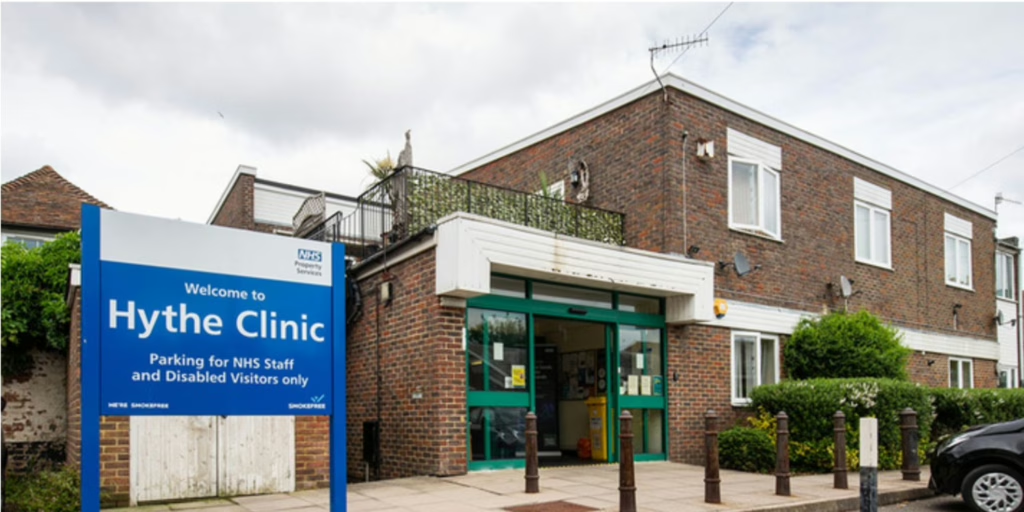
Book a slot for earwax removal in Hythe
Waxfree Guarantee™: Hythe’s only clinic offering the Waxfree Guarantee™.
We’re the only specialist microsuction ear wax removal clinic in Hythe providing Microsuction Earwax Removal and Manual Instrument Earwax Removal by our expert Audiologists. All of our earwax removal practitioners are hand-picked by our founder, Jason Levy. We really are the ear wax removal experts in Hythe.
Our convenient location in Hythe, Kent, also serves Saltwood, Seabrook, Palmarsh, Botolph’s Bridge, St Mary’s Bay, Romney Marsh, Newchurch, Folkestone, Sandgate, Pedlinge, Lympne, West Hythe, Dymchurch, Westenhanger, Beachborough, Stanford, Etchinghill, Postling, Sellindge, Burmarsh, Aldington, Bonnington, Bilsington, Stone Cross, Ruckinge, Mersham, The Forstal, Smeeth, Lilyvale, Brabourne Lees, Monks Horton, Broad Street, Newbarn, Stowting, Sixmile, Lymbridge Green, Bodsham, Newington, Arpinge, Frogholt, Peene, other towns and villages in Kent.… See full details and book “Hearing First Hythe”
Waxfree Guarantee™: Hendon’s only clinic offering the Waxfree Guarantee™.
We’re the only specialist microsuction ear wax removal clinic in Hendon providing Microsuction Earwax Removal and Manual Instrument Earwax Removal by our expert Audiologists. All of our earwax removal practitioners are hand-picked by our founder, Jason Levy. We really are the ear wax removal experts in Hendon.
Our convenient location in Hendon, North London, also serves Hendon, Mill Hill, Hendon, Golders Green, Stanmore, Burnt Oak, Belmont, Queensbury, South Mimms, Brookmans Park, Potters Bar, Southgate, Hadley Wood, Arkley, Kitt’s End, Oakleigh Park, Highwood Hill, Whetstone, Northaw, Cockfosters and Finchley.… Full clinic information “Hearing First Hendon”
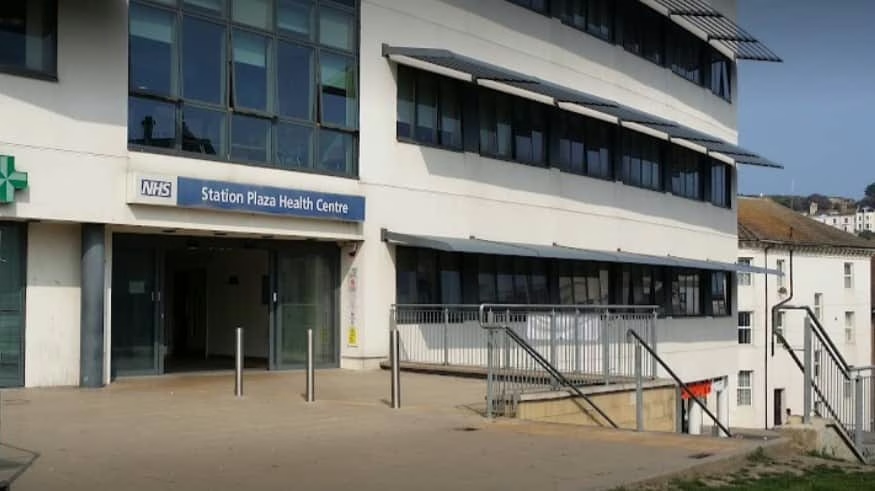
Book a slot for earwax removal in Hastings
Waxfree Guarantee™: Hastings’ only clinic offering the Waxfree Guarantee™.
We’re the only specialist microsuction ear wax removal clinic in Hastings providing Microsuction Earwax Removal and Manual Instrument Earwax Removal by our expert Audiologists. All of our earwax removal practitioners are hand-picked by our founder, Jason Levy. We really are the ear wax removal experts in Hastings.
Our convenient location in Hastings, East Sussex, also serves Sussex, Battle, Bexhill, Robertsbridge, Westfield, Pevensey, Brede, Seddlesfield, Ninfield, Catsfield, Hooe, Wartling, Herstmonceux, Rye, Camber, Peasmarsh, Burwash, Beckley, Northiam, Bodiam, Salehurst, Sandhurst, Hawkhurst, Hurst Green, Cripps Corner, Brightling and Eastbourne.… Open the clinic page “Hearing First Hastings”
We address common questions to help patients plan visits and choose services: how long microsuction takes, whether it causes pain, how quickly hearing may recover and what happens if an ENT referral is needed. FAQs also cover practical pre appointment steps, such as bringing a medication list and whether children should be accompanied. The answers are clinician reviewed and updated regularly to keep information current and reliable.
Answers to specific patient concerns
Clinician reviewed FAQs cover safety considerations for patients on anticoagulants, when GP clearance is required after recent ear surgery and situations demanding urgent ENT review. We also explain admin matters like changing or cancelling appointments, accessing medical records and how branches handle GP or hospital referral letters. Clear, clinician authored FAQs promote patient autonomy and help reduce avoidable calls to reception.